 AExcellent
San Tan Valley, AZ
ASP - America's Swimming Pool Company of Queen Creek
- Pool service
- Pump repair
- Pool repair
- +3 more
- 4.8 · 225
- In business
- 21 yrs
- ROC no.
- Listed
Service · Phoenix metro
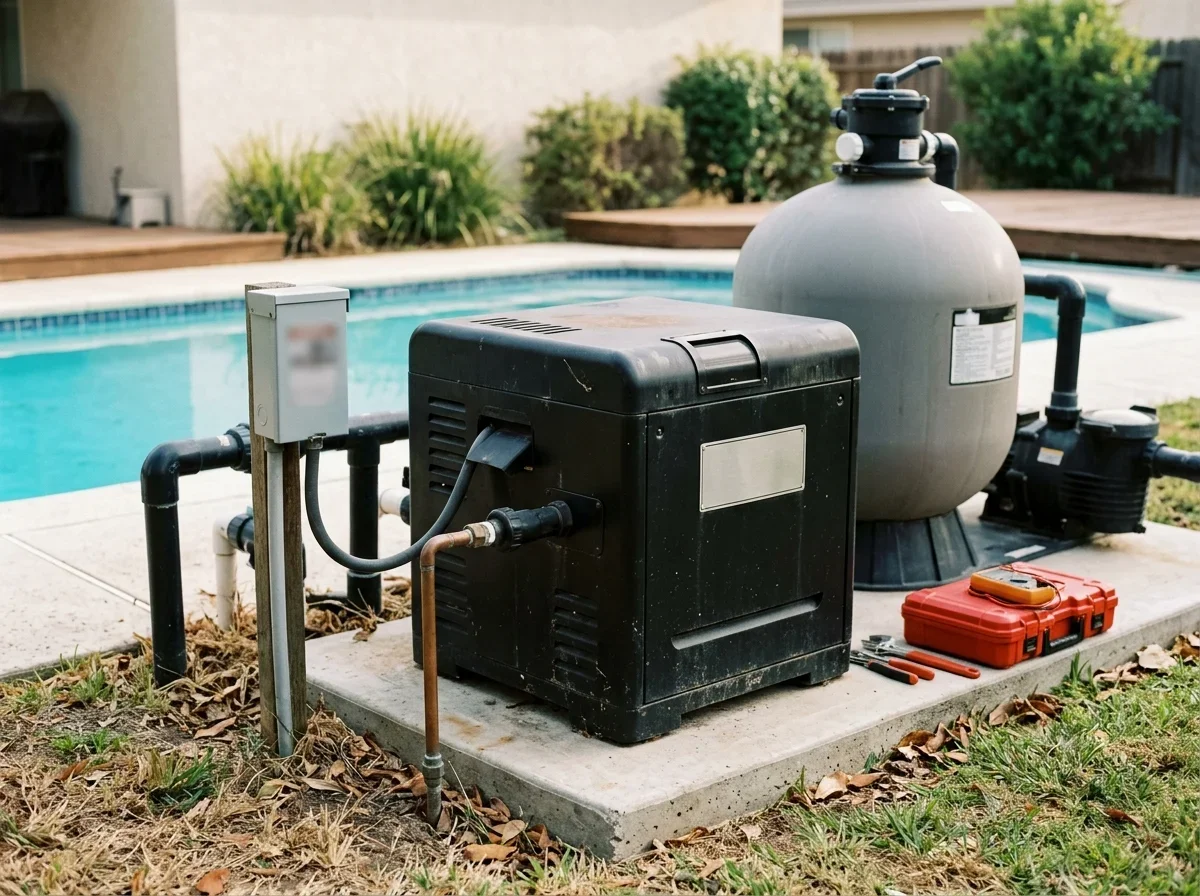
Diagnosis and repair of gas and heat-pump pool heaters, including ignition, thermostat, pressure-switch and heat-exchanger faults, and replacement of heaters that cannot be repaired.
64 listed Valley companies say they do this.
Dead Heater, Cold Pool, Real Answers
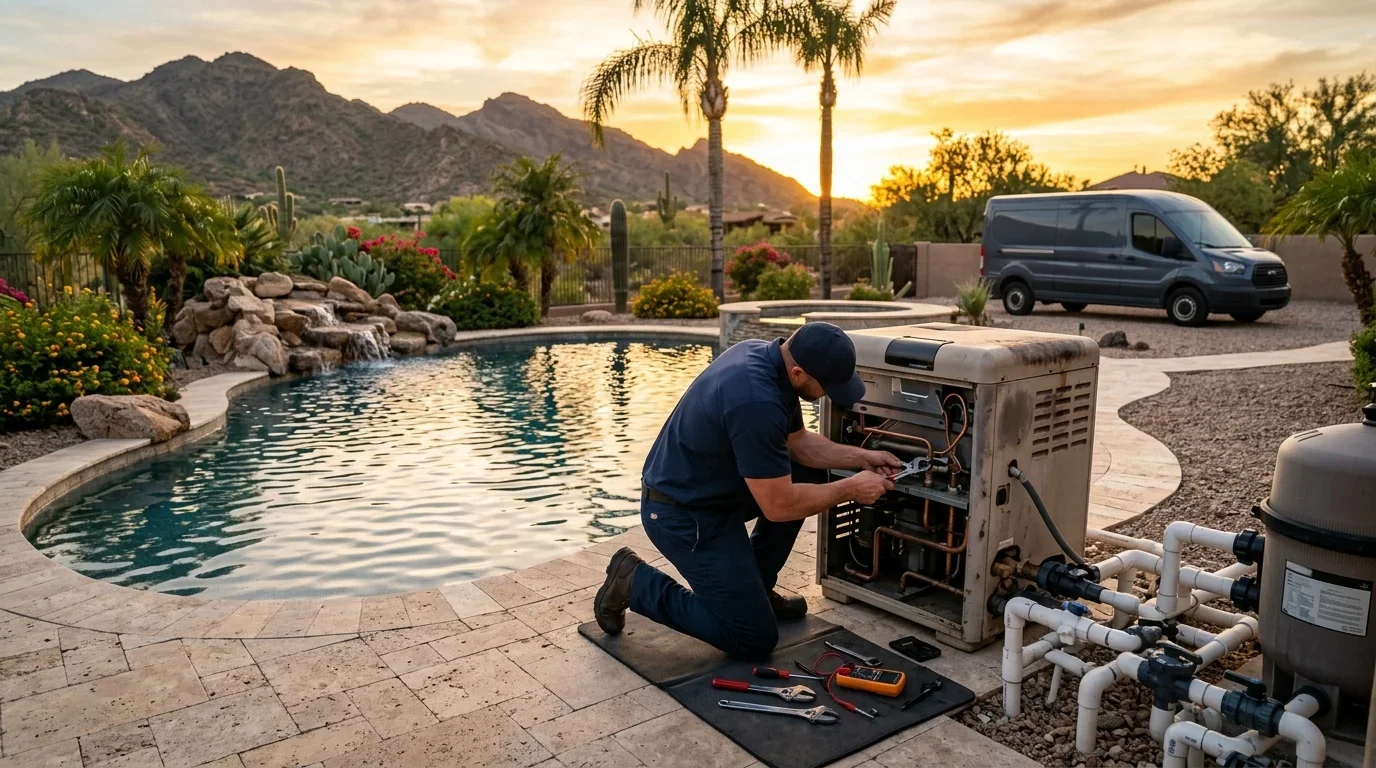
A pool heater that won't fire needs a diagnosis, not guesswork. Gas and heat-pump units fail in different ways.
01
Gas heaters fail at the igniter, thermostat, pressure switch or heat exchanger. Heat pumps work differently. They absorb air heat through an evaporator coil, refrigerant, compressor and condenser, so their faults live in a different place.[1]
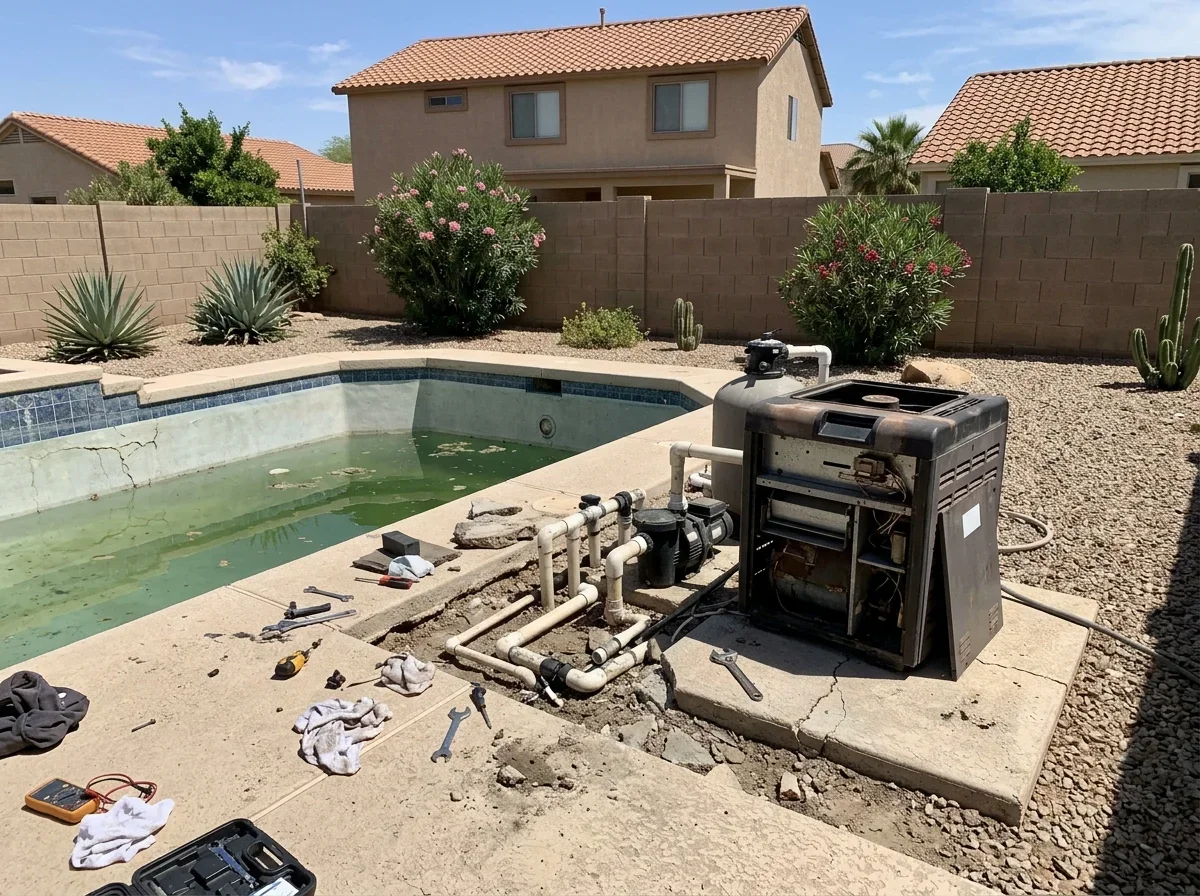
Check flow, filter, settings and power first. The pool heater not heating guide walks through those checks.
Leave these to a licensed technician.
Waiting lets a small fault grow into a failed major component. In Phoenix, Mesa or Chandler, a heater that sits dead can turn a part swap into a full replacement.
How serious is it
Level 1 of 3: Check first
Signs No heat, heater not firing, error lights, unusual noises
What to do Check flow, filter, settings and power
Level 2 of 3: Call a technician
Signs Repeated shutdowns, visible leaks or corrosion
What to do Book a repair before the fault grows
Level 3 of 3: Stop and call
Signs Gas smell, scorching, water leaking from the heater, repeatedly tripped breakers
What to do Leave it to a licensed technician
Sound familiar? The heater clicks but never lights. You reset it twice. Now it won't even try.
02
Price depends on heater type, the failed part, labour, and whether the job is a repair or a replacement. One published guide says most common pool-heater repairs fall between $165 and $765, covering gas, electric and solar heaters.[2]
Price at a glance
Common pool-heater repairs
$165 to $765
Phoenix-area pool companies' own websites, checked October 2026, show the following:
| Item | What the sources print |
|---|---|
| Diagnostic or service-call fee | Most list $85 to $95; full spread $75 to $165 |
| Equipment repair labour | One company lists $80/Hour + Parts (30 Minute Minimum) |
| Specific part (igniter, thermostat, pressure switch) | Depends on the job |
| Heat exchanger or compressor | Depends on the job |
| Replacement heater | Depends on the job |
One Phoenix company's site says general swimming pool repairs run $100 to $20,000. That shows how wide the spread is across all pool work, not heaters alone.
Get a written, itemised quote and compare diagnosis fees before you agree to work.
03
The visit follows six steps, from the first questions to a test run.
Step by step
The six steps of a repair visit
Intake
The technician asks about symptoms and the heater's make and model.
Safety and flow checks
Water flow, filter condition and power or gas supply come first.
Fault diagnosis
The cause points to a part or a major component.
Written quote
Approve it before work starts.
Repair
The part is swapped or the fault corrected.
Test run
The heater is cycled to confirm it fires and holds temperature.
A contract over $1,000 must be in writing, with the licence number, price and payment terms. It should also say who pulls any permits.
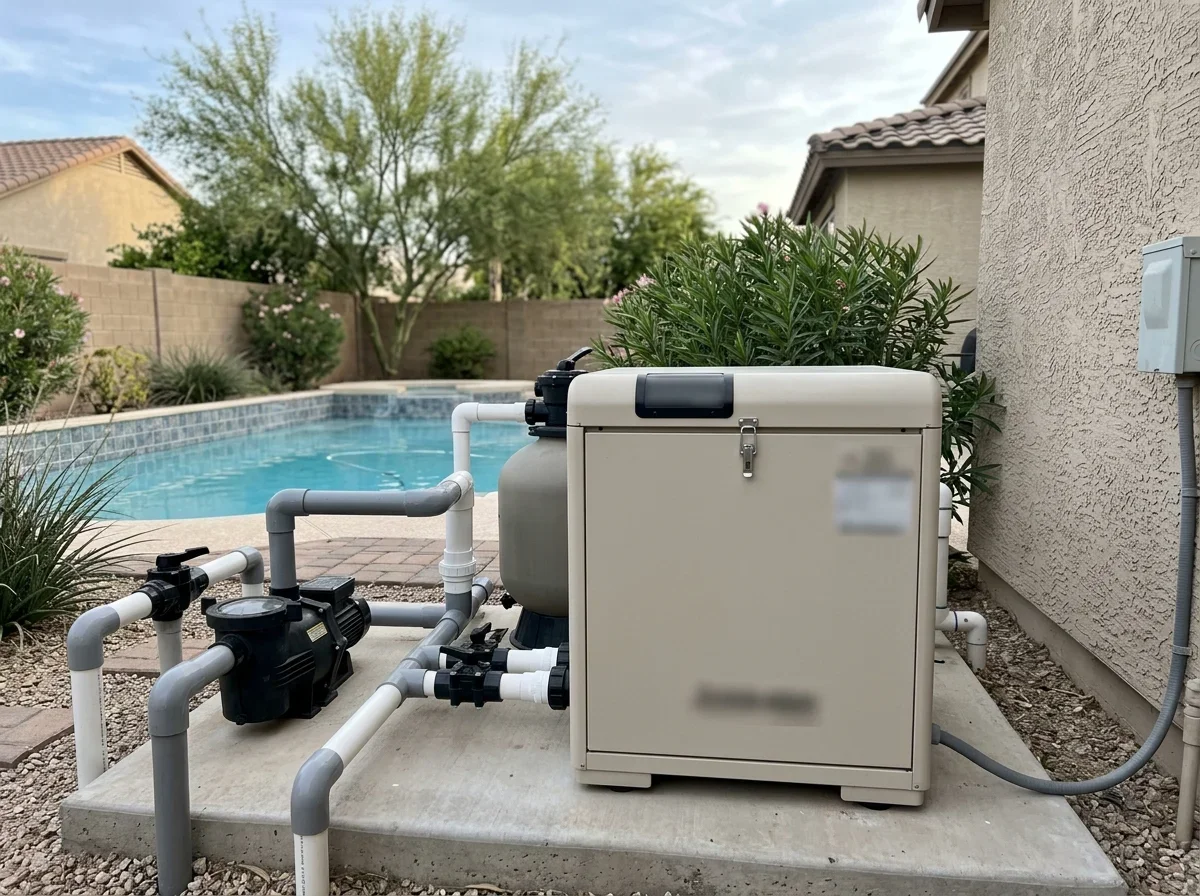
Weigh age, repair scope, heat-exchanger condition, efficiency and fuel type. A simple heat-pump part is one thing. A refrigerant-circuit or compressor fault is a bigger repair.[1]
A replacement heater needs gas and electrical connections done by appropriately licensed contractors.
Permit rules vary by city, so ask your contractor and your city. Mesa lists permits for mechanical or electrical modifications, and Scottsdale and Gilbert homeowners should confirm locally too.
04
Arizona licenses pool work under R-6, CR-6, B-5, B-6, KA-5 and KA-6. R-6 and CR-6 cover service and minor repair, while B-6 and KA-6 add solar heating.
Gas line and electrical work beyond the first disconnect can need a different licence class.
"Licensed, bonded and insured" in an ad proves nothing. ROC requires only workers' compensation insurance, not general liability, so ask for proof of coverage directly. See Is "Licensed, Bonded and Insured" Enough? and R-6, B-5 or KA-5: Which Licence Fits?.
Questions to ask:
Owners who hire unlicensed entities have no ROC recourse.
Complaints against licensed contractors are due within two years.
Compare Peoria, Surprise, Tempe and Glendale pros on licence class and quote detail before you book. Tick these off with each contractor you call:
Checklist
Questions to ask each contractor
0 of 4 ticked
Tick them off as you go. Nothing is saved or sent.
The most effective heater-free methods are solar covers, solar rings, and simply running the pump during the warmest part of the day. In Phoenix, the sun does much of the work, so pool owners often need only minor adjustments to keep water comfortable through spring and fall.
The most common options include:
In Arizona, a solar cover used nightly can add several degrees over a few days, which is often enough for comfortable swimming outside summer.
AExcellentSan Tan Valley, AZ
Phoenix, AZ
 AExcellent
Serves the Valley