 BGood
BGoodService · Phoenix metro
Pool Fence and Safety Barrier Installation
Installation of code-compliant pool fences, self-closing gates, and removable safety barriers around residential pools.
1 listed Valley companies say they do this.
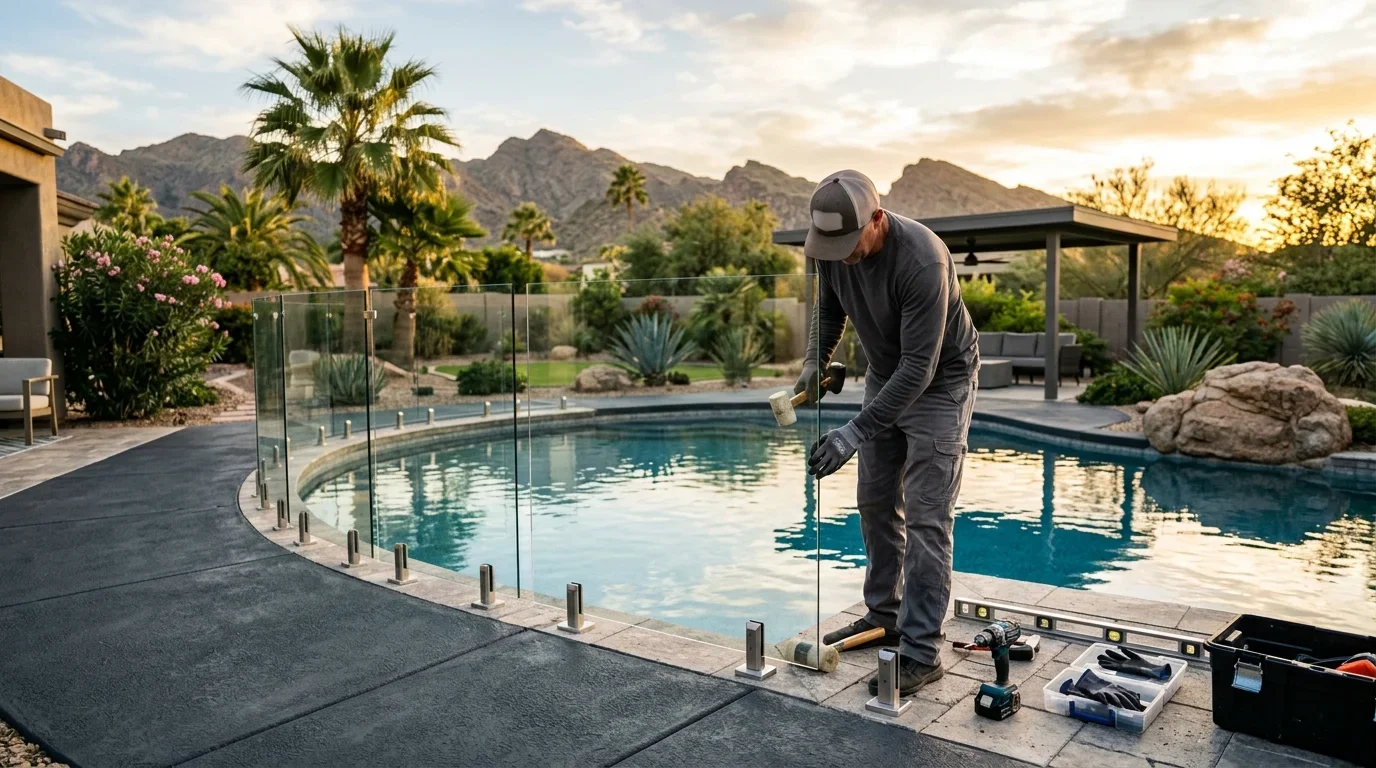
A Compliant Barrier, Installed Right
A pool fence only protects if it meets code, closes on its own, and was hired from a licensed contractor. Phoenix-metro homeowners get the most from it when the details are settled before the first post goes in.
- Self-closing, self-latching gates that actually latch
- A barrier type that fits your yard and your code
- An Arizona ROC licence you have checked yourself
01
Common problems
Signs You Need a Pool Fence or Barrier Upgrade
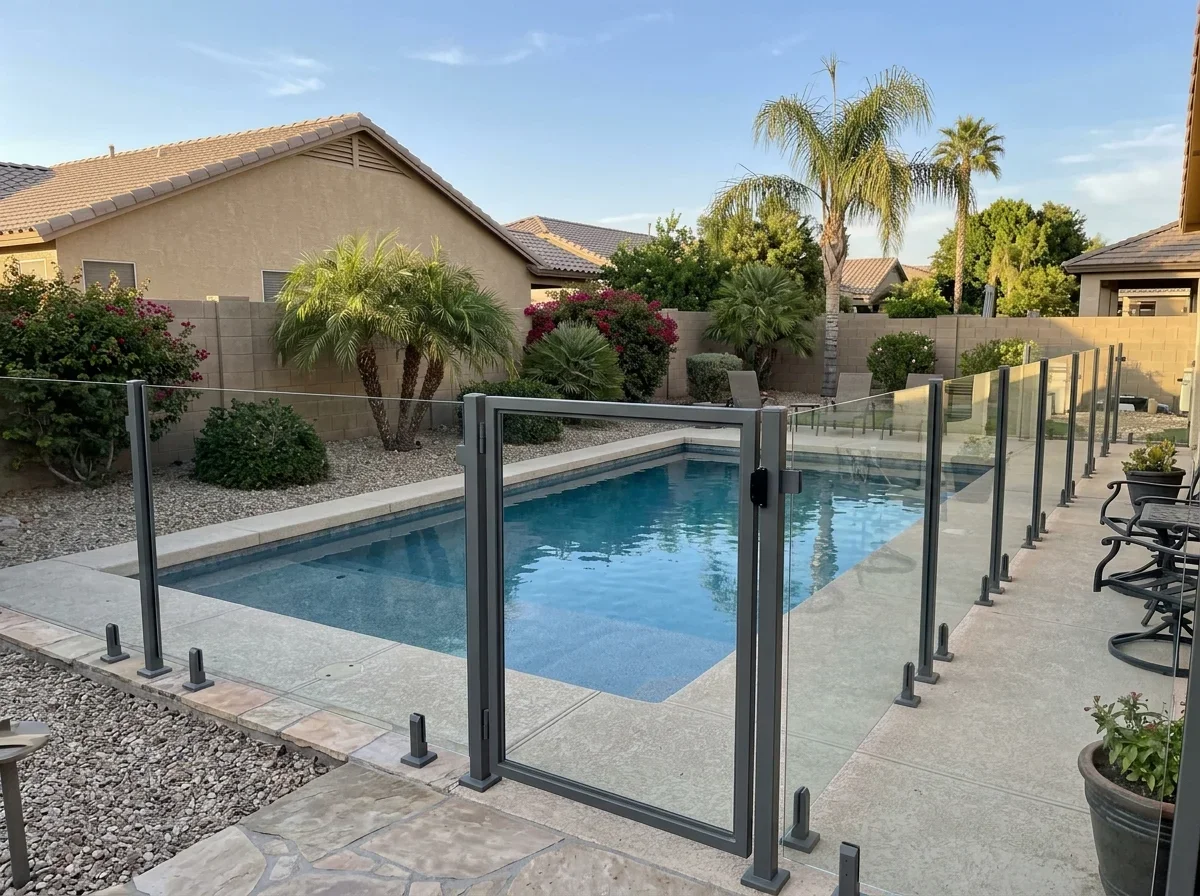
Phoenix requires a non-climbable fence or wall at least five feet high, with self-closing, self-latching gates that open outward, away from the pool.[2] If your yard falls short of that, you have a gap worth closing.
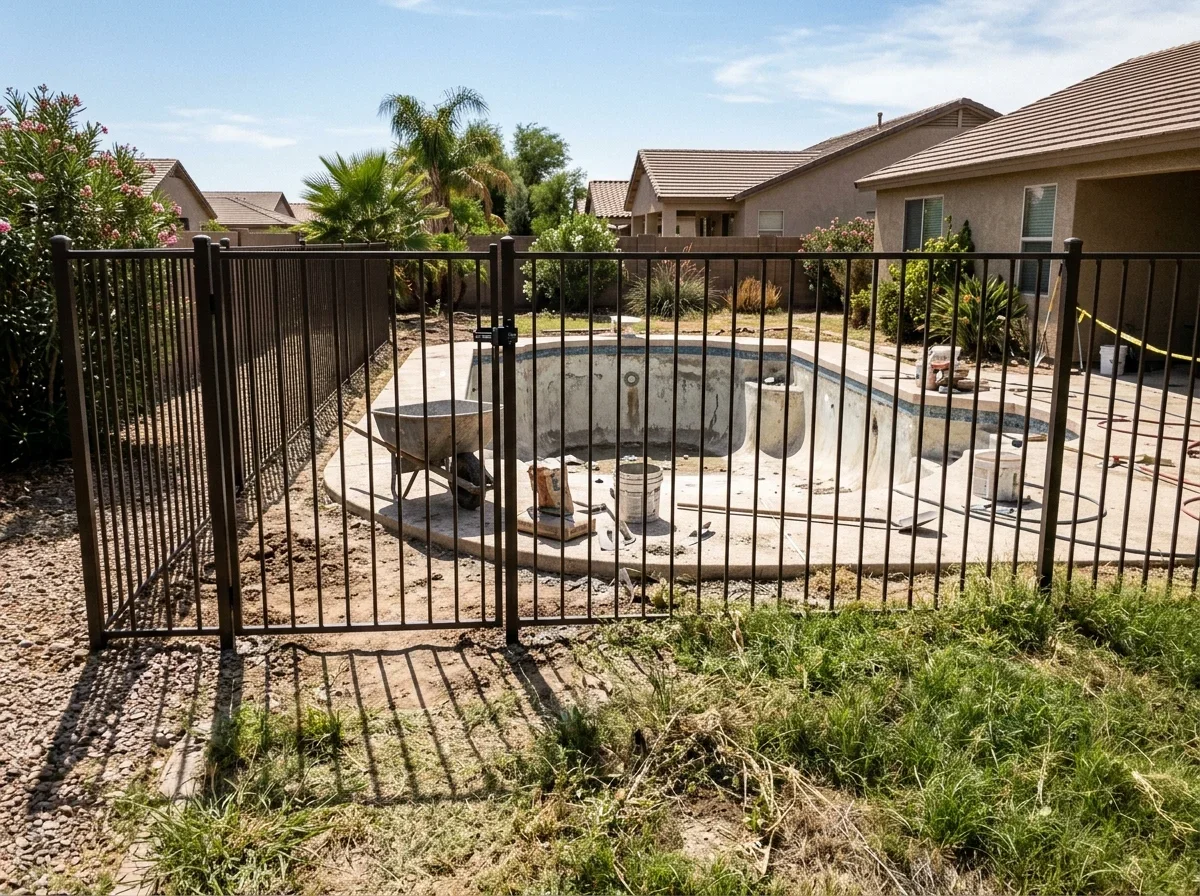
Watch for these:
- No barrier at all, or only a house wall or a backyard fence between the pool and kids or pets
- Openings that let a four-inch ball pass through, or a gap under the barrier larger than two inches over soil[1]
- A gate that swings toward the pool, drifts open, or doesn't latch
- A fence under five feet, or one with horizontal rails a child can climb
- A new home purchase, or a remodel that adds pool features in Scottsdale, Mesa or Gilbert
Sound familiar? The gate has never quite latched. You propped it shut with a rock. Now a neighbour's child is visiting and you're watching the gate instead of the kids.
A professional install fixes the gate, the gaps and the height in one visit, to the spec your city checks against.
02
What it costs
Pool Fence Cost: What Moves the Price
Quotes vary by home and contractor. No honest number can be given before someone measures your yard.
What matters is knowing which factors push a quote up or down, and what to ask about each.
Price factors
What moves a pool fence quote
Barrier material
Mesh, aluminum and glass differ in material and labour
Linear footage
More perimeter means more panels, posts and labour
Gates
Self-closing, self-latching hardware adds parts and fitting time
Ground conditions
Caliche hardpan makes post holes harder to dig
Surface
Concrete, pavers and soil need different mounting
| Cost driver | How it moves the price | What to ask the contractor |
|---|---|---|
| Barrier material | Mesh, aluminum and glass each carry different material and labour needs | Which type meets code and the city's materials guidance for my pool? |
| Linear footage | More perimeter means more panels, posts and labour | Is the full enclosure counted, including house-side sections? |
| Gates | Self-closing, self-latching hardware adds components and fitting time | Which gate hardware is quoted, and is it tested at handover? |
| Ground conditions | Caliche hardpan, common across the Valley, makes digging post holes harder | Did you check ground conditions at the site walk? |
| Surface | Concrete, pavers and soil each need different mounting | How will posts be anchored in my deck or yard? |
| Permits | Someone must handle them; it affects both cost and timing | Who pulls the permit, and is it written into the contract? |
| DIY vs. professional | A kit shifts labour cost to you, but not the code responsibility | Will you inspect or finish a kit I bought? |
Get at least two written quotes that itemise the same scope, so you compare like with like.
Pro tip
Send every contractor the same list of fence sections, gates and permit duties so the quotes can be compared line by line.
For budgeting detail, see pool fence cost and what to budget.
03
What to expect
How a Pool Fence Installation Works, Step by Step
Timing depends on the system and your site. Treat any "done in a few hours" claim with caution. The seven steps below run from the first site visit to the final walkthrough.
Step by step
The seven steps at a glance
Site walk and measure
The installer checks the perimeter, walls, gates and ground.
Barrier and gate layout
Gates open outward and the barrier sits at least 20 inches from the water.
Written quote and contract
Contracts over $1,000 must be in writing.
Permit check
Confirm your own city's barrier rules.
Installation
Posts or sleeves go in, panels go up, gates are hung.
Gate and latch test
The gate should swing shut and latch on its own.
Walkthrough
Get signed documents and a signed receipt for any cash.
- Site walk and measure. The installer checks the pool perimeter, existing walls, gate locations and ground conditions. Ask about caliche here.
- Barrier and gate layout. Gates should open outward, away from the pool, and the barrier should be set at least 20 inches from the water's edge.
- Written quote and contract. Contracts over $1,000 must be written, with licence number, price, payment terms and the ROC complaint notice.
- Permit check. Phoenix publishes barrier requirements, and Scottsdale requires separate permits for pools, spas and fences. Confirm your own city's rules.
- Installation. Posts or sleeves go in, panels go up, and gates are hung.
- Gate and latch test. The gate should swing shut and latch on its own, every time.
- Walkthrough. Get copies of signed documents, and a signed receipt for any cash.
Contract checklist
- Licence number
- Total price
- Deposit and progress payments
- Who pulls the permit and schedules inspection
- The ROC complaint notice
Don't pay cash or let payments run ahead of the work.
04
Choosing a company
How to Verify an Arizona ROC Licence Before You Hire
Code-required barrier work falls under the B-5 class, or KA-5 for dual licences. R-6 and CR-6 are service and repair classes, so ask the ROC whether fence work fits before assuming it does.
Our guide to R-6, B-5 or KA-5 explains the classes.
Run these checks on the ROC Contractor Search
- The licence is active
- The class covers the contract work
- Bond and Recovery Fund status are in good standing
Questions to ask every installer
- How does your product meet the city's barrier requirements?
- Can you show a workers' compensation certificate?
- Do you carry general liability cover, and can you prove it?
- Who handles the permit, and where does the contract say so?
Red flags
- "Licensed, bonded and insured" as the only proof. The ROC says such ads prove nothing, and it requires workers' compensation, not general liability.
- Door-to-door crews offering a low price after a neighbourhood incident
- Requests for cash, or payments ahead of the work
Licensing matters financially. The licence bond is small, and the Recovery Fund, up to $30,000 per owner, applies only to licensed contractors.
Checklist
Questions to ask every installer
0 of 4 ticked
Tick them off as you go. Nothing is saved or sent.
Hire unlicensed, and you have no ROC recourse.
See questions to ask before hiring a pool contractor, then compare the featured Phoenix, Chandler and Peoria installers below.
Questions Valley pool owners ask
Arizona does not have a single statewide pool barrier code that applies to every city; requirements are set locally, and most Arizona cities and counties adopt versions of the International Swimming Pool and Spa Code (ISPSC) or the International Residential Code. In general, residential pools must be enclosed by a barrier at least 48 inches high that prevents unsupervised child access. Local permits and inspections are usually required when installing or altering a barrier.
Typical barrier requirements include:
- Height — minimum 48 inches measured on the outside of the barrier
- Gaps — openings small enough that a 4-inch sphere cannot pass through
- Gates — self-closing and self-latching, with the latch at least 54 inches high or on the pool side
- Climbability — no horizontal members that allow easy climbing on the outside
- Clearance — barrier separation from the pool edge and any structures that could serve as climbing aids
Always confirm requirements with your city building department before installation.
- City of Phoenix. "Pool Barriers – Requirements." https://www.phoenix.gov/content/dam/phoenix/pddsite/documents/trt/external/dsd_trt_pdf_00144.pdf. Accessed October 17, 2026.
- City of Phoenix. "Pool Policy." https://www.phoenix.gov/administration/departments/housing/section-8-housing/section-8-inspections/pool-policy.html. Accessed October 17, 2026.
Top-graded for fence and barriers
All 1BGood