 AExcellent
San Tan Valley, AZ
ASP - America's Swimming Pool Company of Queen Creek
- Pool service
- Pump repair
- Pool repair
- +3 more
- 4.8 · 225
- In business
- 21 yrs
- ROC no.
- Listed
Service · Phoenix metro
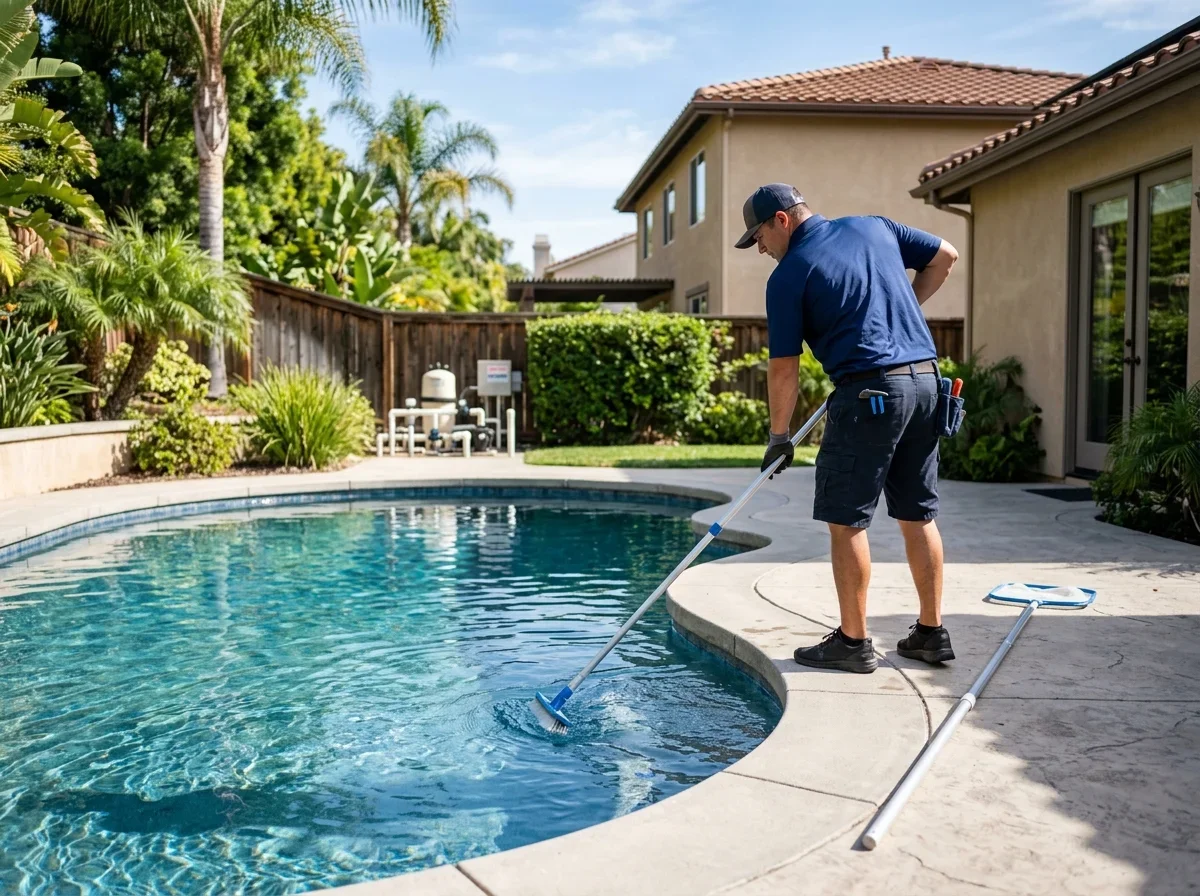
Recurring weekly or monthly pool cleaning, chemical balancing, and equipment checks to keep residential pools clear and swimmable year-round.
275 listed Valley companies say they do this.
Clear Water Starts With the Right License
Green water and guesswork cost more than a proper routine. A recurring service plan keeps your pool swimmable, but only if the tech is licensed for the job.
01
Recurring pool service is cleaning, chemical balancing and equipment checks on a weekly or monthly schedule. Some plans cover chemicals only, while full-service plans add brushing, vacuuming and basket emptying. One-time deep cleans are sold as add-ons.
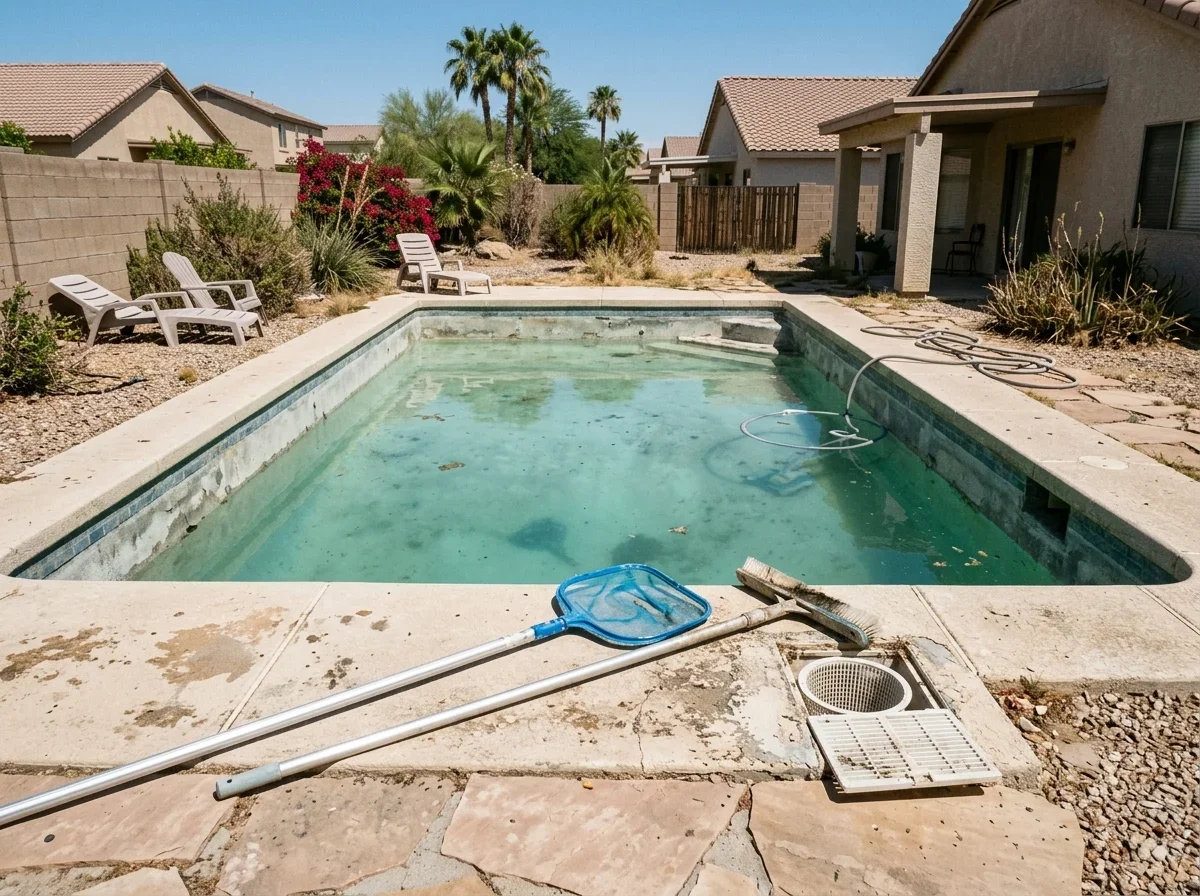
Service is not repair or resurfacing.
Arizona's R-6 license lets a contractor service and perform minor repairs on residential pools. It excludes gas lines, gas chlorine systems, potable-water plumbing connections and electrical work beyond the first disconnect.[1] Broader work falls under B-5 or B-6.[1]
Sanitizer type changes the routine too. See chlorine vs. salt water pool upkeep for the differences.
Sound familiar? The water turned cloudy, you added chemicals, and it cleared for a few days. Then it came back worse, and the fix now takes more than a bottle from the store.
Pool pump problems can show up at any time of year, so check the pump regularly. Equipment checks belong in every visit.
That matters from Mesa to Peoria.
02
Price depends on service level (chemicals-only versus full service), visit frequency, pool size and condition, and equipment type. Confirm what is and is not included before you compare monthly quotes.
Price factors
What moves the price
Service level
Chemicals-only costs less than full service
Visit frequency
More visits per month raise the monthly price
Pool size and condition
Larger or neglected pools cost more to maintain
Equipment type
Different equipment changes the work involved
Phoenix-area pool companies' own websites, checked October 2026, list weekly plans mostly at $110 to $150 per month, with a full spread of $60 to $175. Many of those are "starting at" prices, and some include chemicals while others do not.
Price range
Weekly plan cost per month
| Item | Low | High |
|---|---|---|
| Most listed plans | $110 | $150 |
| Full spread | $60 | $175 |
| Budget guide, with chemicals | $150 | $170 |
One 2026 budget guide lists weekly service with chemicals at $150 to $170 a month in the Phoenix metro.[3]
| Item | Typical figure |
|---|---|
| Weekly plan, most listed | $110 to $150 per month |
| Weekly plan, full spread | $60 to $175 per month |
| Single cleaning (one company) | $125 |
| Pool inspection (one company) | $100 |
Written contracts are required above $1,000 and must show the license number. A year of weekly service may qualify, depending on the total.
For the full breakdown, read what pool service costs in Phoenix.
03
A typical visit follows these steps:
Step by step
What happens on a service visit
Skim and clean
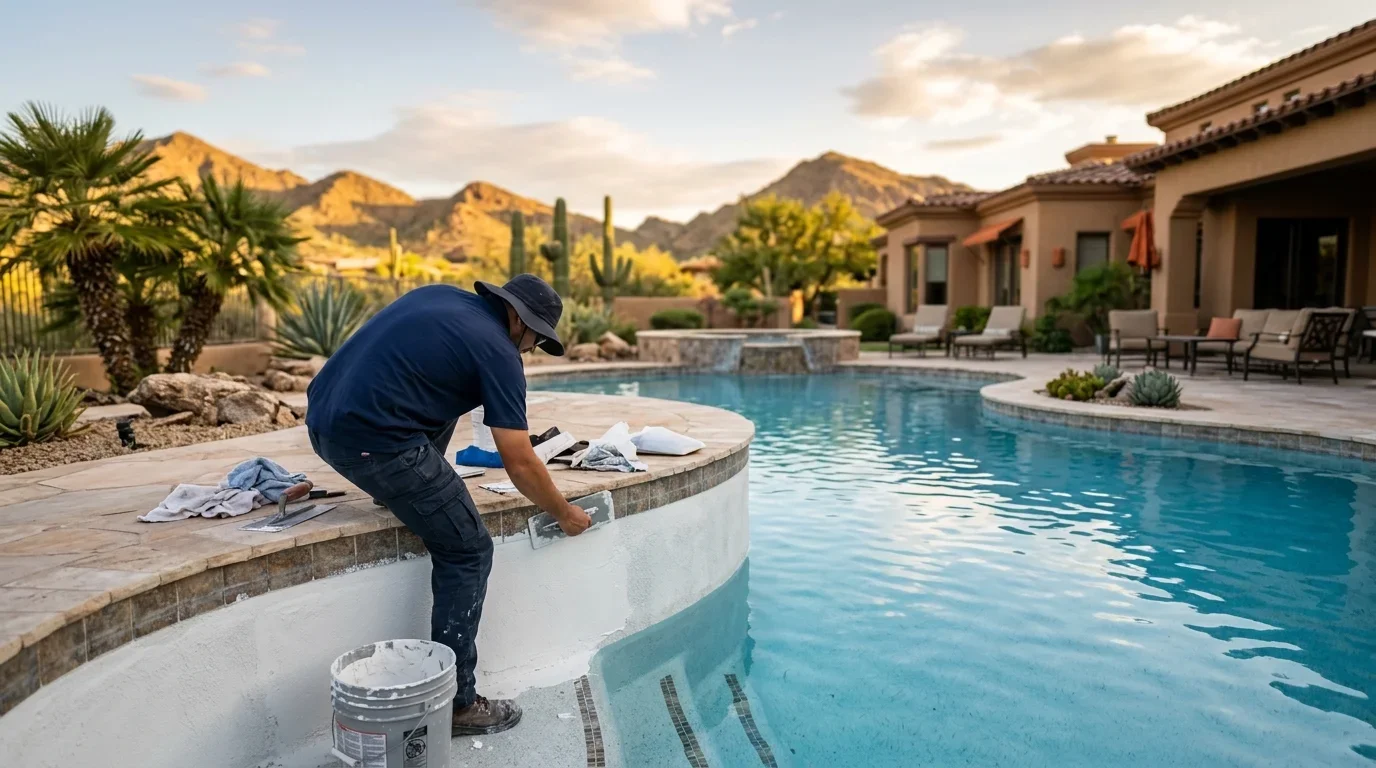
Skim the surface, then brush and vacuum as needed.
Empty baskets
Clear the pump and skimmer baskets.
Test the water
Test and adjust the water chemistry.
Check equipment
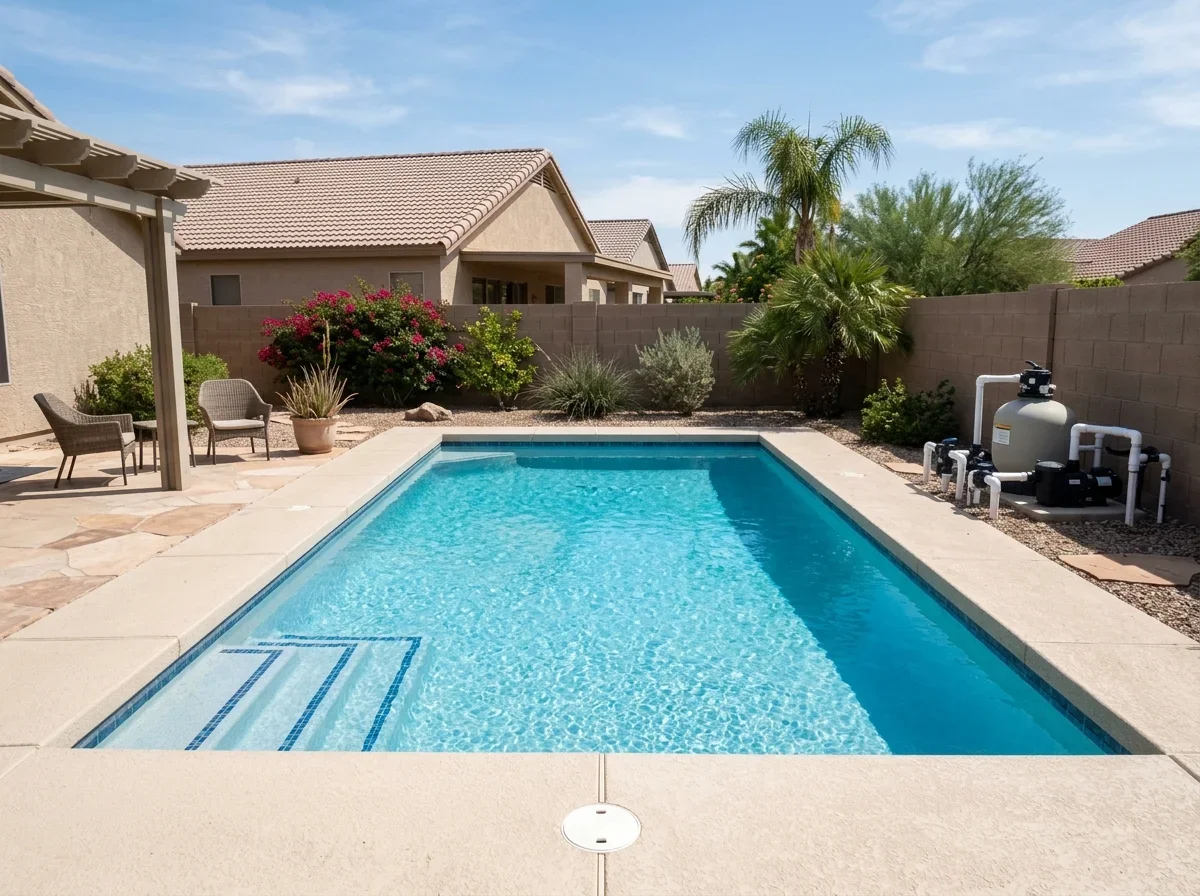
Look over the filter and equipment.
Leave a note
Record what was tested, added and observed.
Scope varies by company, so ask for the written task list before you sign.
If a task is not on it, assume it is not included.
Treat cadence as a question for your provider. Given your pool's size, condition and sanitizer type, what visit frequency do they recommend, and why? A salt system changes upkeep and equipment wear, which the chlorine vs. salt comparison covers.
One-time deep cleans, equipment repair and seasonal openings or closings are usually priced separately.
If the problem is already a swamp, a green pool cleanup is a different job from routine service.
04
Arizona requires an ROC license for pool work. R-6 or CR-6 covers service and minor repair, while B-5, B-6, KA-5 or KA-6 cover broader work.[1]
| Class | Covers | Excludes |
|---|---|---|
| R-6 / CR-6 | Service and minor repair of residential pools | Gas lines, gas chlorine systems, potable-water plumbing connections, electrical beyond first disconnect, full plaster or pebble replacement |
| B-5 / B-6 | Construction, service and repair, including specified water and gas lines and wiring | Check the class on the ROC record |
Check any contractor in Scottsdale, Chandler or Gilbert the same way:
The ROC states that the Contractor Search is the only sure way to know whether a contractor is licensed.[2] "Licensed, bonded and insured" in an ad proves nothing.
Hiring an unlicensed entity leaves you without ROC complaint recourse.
Manufacturer and industry credentials are optional training, not licenses. Ask for the task list, the license number on paperwork and proof of workers' compensation. Then compare local pros side by side below, starting with the questions to ask before hiring.
Checklist
Questions to ask before hiring
0 of 6 ticked
Tick them off as you go. Nothing is saved or sent.
The most expensive part of a pool is usually the construction shell and excavation, which can account for a large share of total build cost. For existing pools, the costliest repair is typically a full resurfacing or replastering, or replacing the pool equipment (pump, filter, heater, and automation) when it fails.
The most common cost drivers include:
AExcellentSan Tan Valley, AZ
 AExcellent
Phoenix, AZ