 AExcellent
San Tan Valley, AZ
ASP - America's Swimming Pool Company of Queen Creek
- Pool service
- Pump repair
- Pool repair
- +3 more
- 4.8 · 225
- In business
- 21 yrs
- ROC no.
- Listed
Service · Phoenix metro
Locating and fixing leaks in pool shells, plumbing lines, skimmers, and equipment using pressure testing and electronic detection.
42 listed Valley companies say they do this.
Losing water?
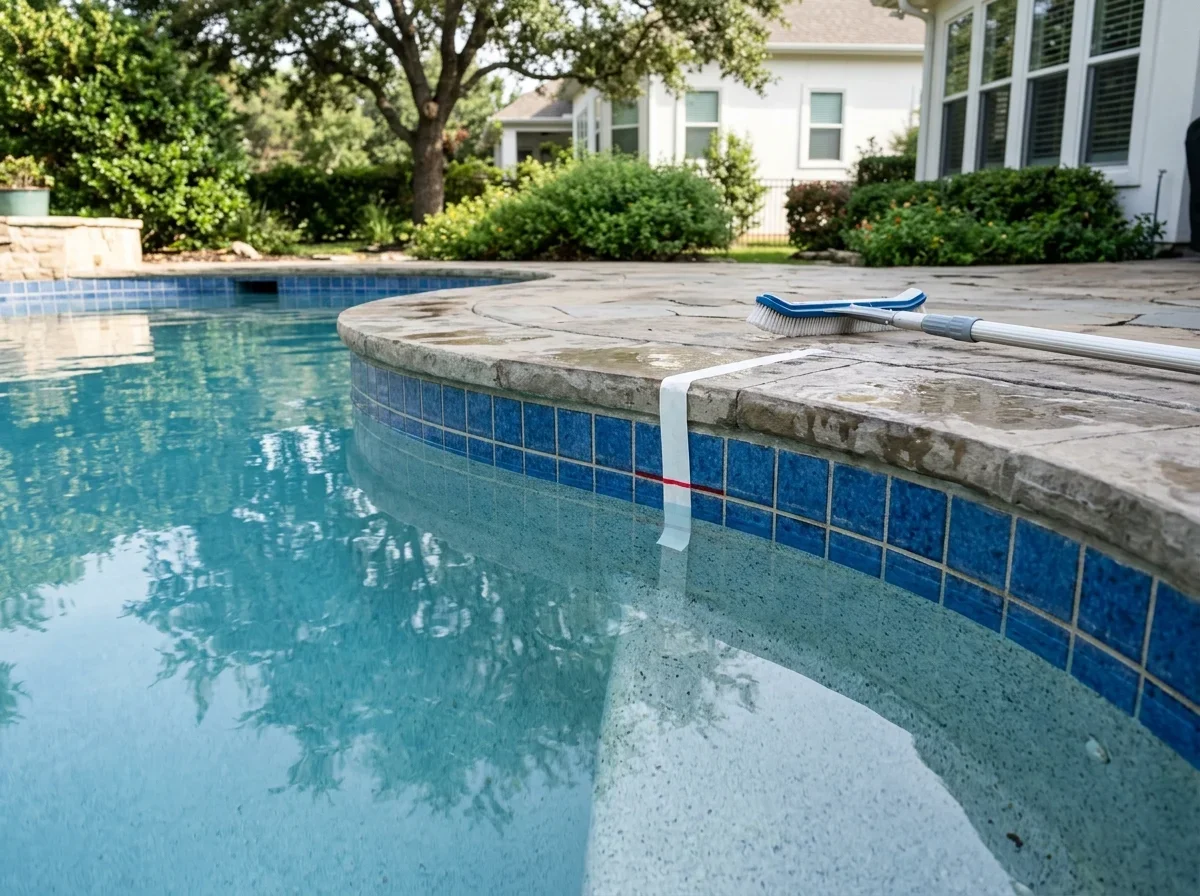
In a hot, dry, windy week the sun and wind take a lot from open water. Tell us how far your pool dropped and we’ll set it beside what the weather accounts for this week. Then do the bucket test: fill a bucket with pool water, set it on the first step, and mark the level inside and outside. After a day, if the pool dropped more than the bucket, something besides evaporation is taking water.
Reading the week’s weather…
Find leak detection Weather: AZMET (University of Arizona), Phoenix Encanto station. Coefficient: FAO-56 Table 12, open water under 2 m deep.Water Loss Won't Fix Itself
A pool leak keeps draining while you guess. Find the source before the water bill, the soil and the equipment pay for it.
01
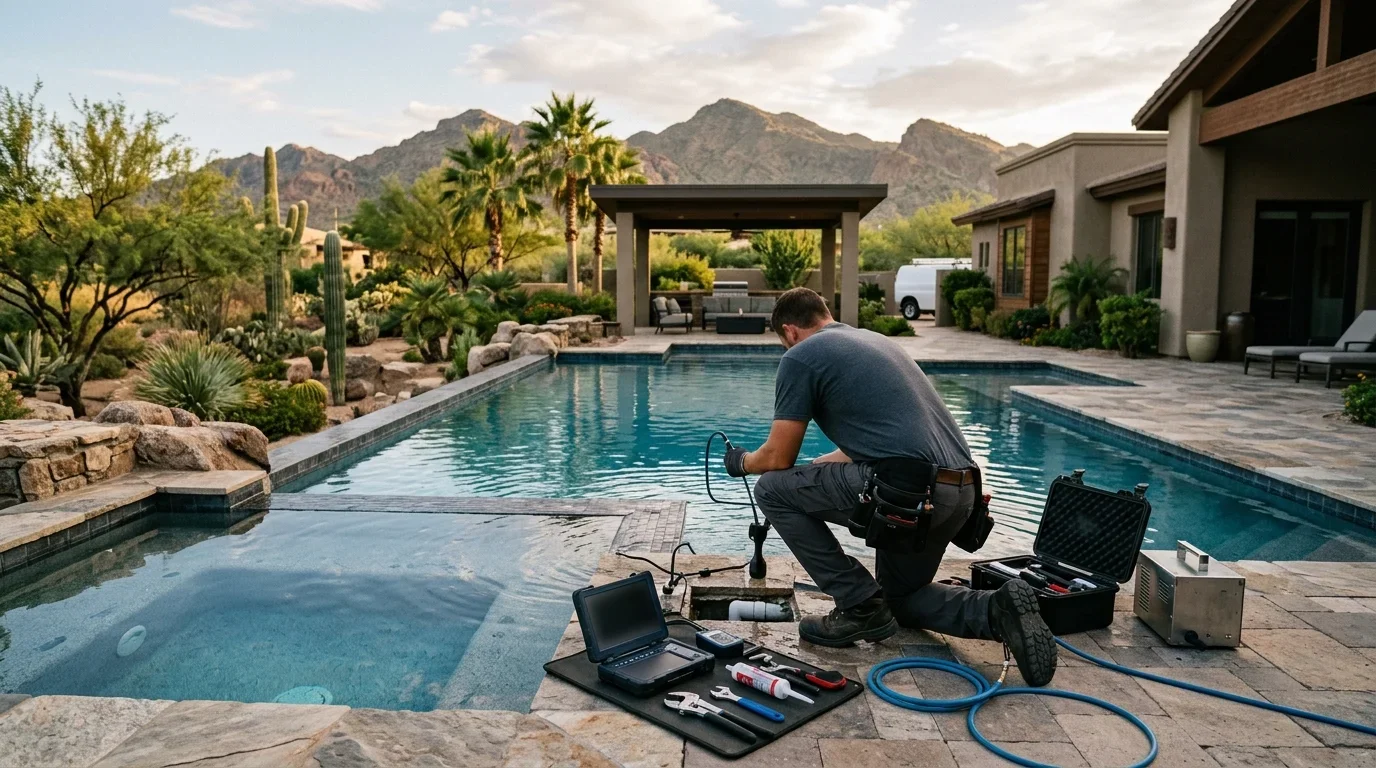
Leak detection and repair means locating and fixing leaks in shells, plumbing lines, skimmers and equipment, using pressure testing and electronic detection. Finding the leak and fixing it are two separate jobs. A pool line repair is one common outcome.
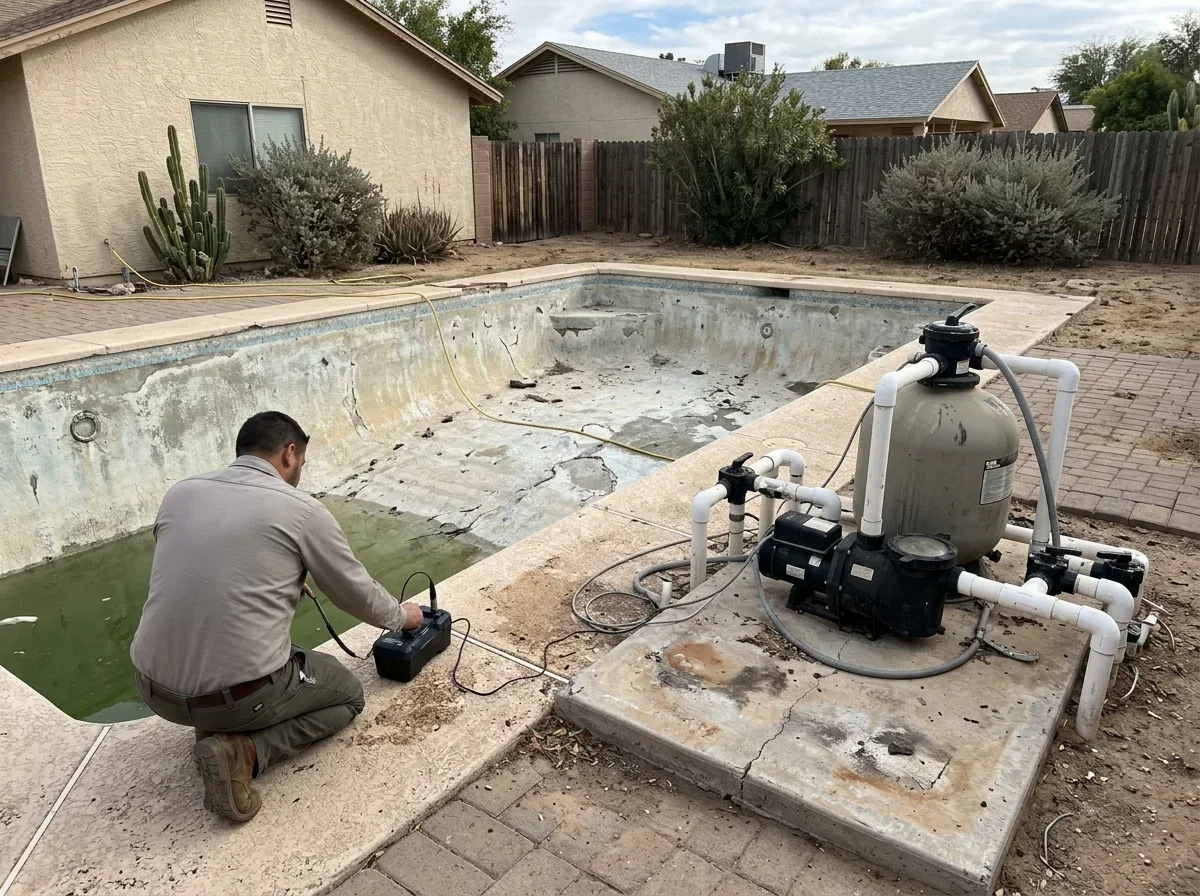
Leaks tend to show up where two materials meet, such as the skimmer, drains, returns and tile line.[1] Equipment connections are another usual suspect.
Watch for:
In Phoenix, summer heat makes evaporation hard to separate from a leak. The bucket and dye tests are the first checks, and why your pool is losing water walks through both.
A leak that appears only while the pump runs points to a different part of the system than one that continues with it off. That is why pros pressure test.
Sound familiar? The level drops every week. You top it off and blame the heat. Then the soil by the equipment turns soft, and the repair is bigger than it needed to be.
Waiting lets water erode the soil around the shell and plumbing. It also leaves the pump running while it pulls air.
How serious is it
Level 1 of 3: Early
Signs Water level drops faster than evaporation explains
What to do Run the bucket and dye tests
Level 2 of 3: Developing
Signs Auto-fill never stops running, or air bubbles show in the lines
What to do Book pressure testing and electronic detection
Level 3 of 3: Serious
Signs Wet, soggy soil near the equipment pad
What to do Stop topping off and get the leak located and repaired
02
Price depends on leak location, access, detection time and repair scope. A leak under decking or plaster that must be opened costs more than a loose fitting at the pad.
Price factors
What moves the price
Leak location
Under decking or plaster costs more than a loose fitting at the pad
Access
Opening decking or plaster adds to the job
Detection time
More testing time raises the detection charge
Repair scope
Small fixes and large repairs sit far apart in price
The figures below come from Phoenix-area pool companies' own websites, checked October 2026, plus one industry source.
| Item | What the sources say |
|---|---|
| Diagnostic or service-call fee | Most Phoenix companies list $85 to $95 |
| Equipment repair labour | One Phoenix company's site says $80/hour plus parts, 30 minute minimum |
| Basic leak screening | $100 to $200[2] |
| Standard detection with pressure testing | $300 to $500[2] |
| Professional detection assessment, overall | $150 to $500[2] |
| Swimming pool repairs, general | One Phoenix company's site says $100 to $20,000 |
| Opening decking or plaster | Depends on the job |
That repair spread shows why a single number means little. These are one company's guidance, not a quote.
Ask for an itemised written quote that lists detection and repair separately. That way you can compare bids in Mesa or Chandler line by line.
Pro tip
Ask each contractor to quote detection and repair as separate lines, so you can compare like with like.
Permit rules for leak repairs are not confirmed for Phoenix, Mesa or Scottsdale. Ask the contractor and your city's permit office before work starts.
03
A leak job runs in six steps, from confirming the loss to final paperwork.
Step by step
The six steps at a glance
Confirm the loss
Rule out evaporation and check visible equipment.
Pressure test
Isolate each line to find the one losing water.
Pinpoint the spot
Acoustic gear or dye locates the exact point.
Match the fix
Repair the line, skimmer seal or shell crack.
Recheck
Retest the pool to confirm the loss has stopped.
Paperwork
Get the contract in writing and confirm the permit.
Summer is the busy season for pool equipment failures, so winter often has more open scheduling.
04
Arizona requires an ROC licence for pool repair. R-6 or CR-6 covers service and minor repair. B-5, B-6, KA-5 or KA-6 cover broader work. The licence class guide explains which fits your job.
Search the contractor on the ROC Contractor Search at roc.az.gov and confirm:
R-6 excludes potable-water plumbing connections, gas lines and electrical work beyond the first disconnect. Confirm class fit before agreeing to line work.
"Licensed, bonded and insured" in an ad proves nothing. ROC requires only workers' compensation insurance, and an unlicensed hire leaves you without ROC recourse. See what that phrase covers.
Also ask these questions of every contractor before you hire, and tick them off as you go:
Checklist
Questions to ask each contractor
0 of 3 ticked
Tick them off as you go. Nothing is saved or sent.
Compare the licensed pros serving Scottsdale, Tempe and the rest of the Valley below.
Pool leaks are usually found by checking the most common failure points in order: equipment and plumbing first, then the pool shell. Most leaks are in the pump, filter, valves, or return lines because they are easiest to test and repair.
The most common leak locations include:
A leak detection specialist will typically perform pressure testing on the plumbing lines first before inspecting the shell.
AExcellentSan Tan Valley, AZ
 AExcellent
 AExcellent
Serves the Valley