Where chlorine and salt water pools actually differ
A salt pool is still a chlorine pool. Salt chlorine generators use electricity and dissolved sodium chloride to make chlorine in the water, and that chlorine produces the same active sanitizer, hypochlorous acid, as chlorine you add by hand.[1] The Pool & Hot Tub Alliance (PHTA) is explicit that a salt pool is chlorine-sanitized, not chlorine-free.[3]
With a traditional pool, you buy chlorine and dose it through tablets, liquid or a feeder. With a salt pool, you own a generator cell, keep salt at the level your manufacturer specifies, and let the cell make chlorine while the pump runs.[1][2]
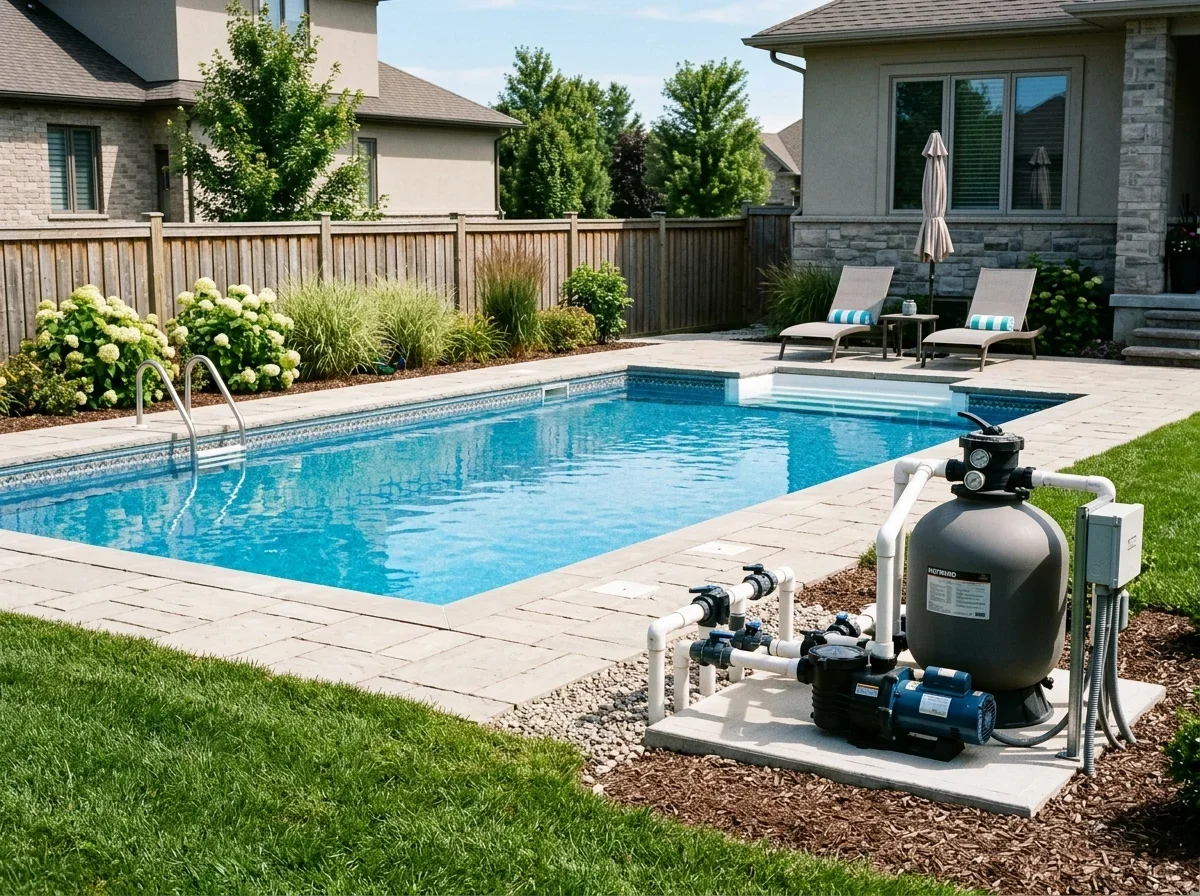
Most in-line generators only produce chlorine when water is circulating, so a pump or flow problem can quietly stop sanitizing.[1]
The soft feel and gentler smell of salt water pools
Many owners describe salt water as softer. Treat that as a result of water balance rather than a different sanitizer, because the active chlorine is the same.[1]
Upkeep on a salt water pool still includes testing
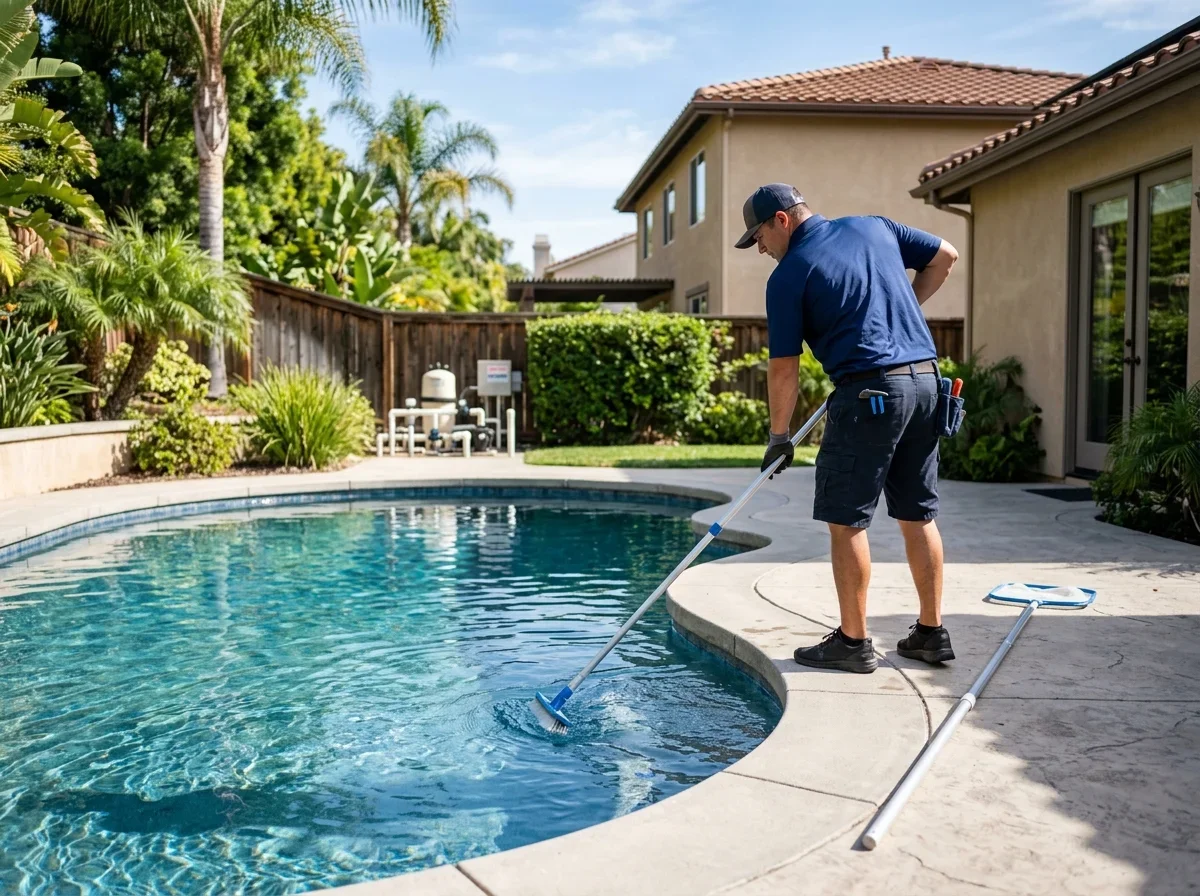
Not hard, but not hands-off either. Salt removes the chlorine dosing, not the testing.
You still check pH, free chlorine and stabilizer, brush, and care for the filter. Salt systems also tend to push pH upward, so periodic acid additions are normal.
| Traditional chlorine | Salt water (chlorine generator) | |
|---|---|---|
| How sanitizer is supplied | Owner adds chlorine tablets, liquid or granular, or uses a feeder | Cell makes chlorine from dissolved salt while the pump runs[1] |
| Routine owner tasks | Test, dose chlorine, balance, brush, clean filter | Test, balance (often acid for pH), check salt level, inspect cell, brush, clean filter |
| Main equipment to maintain | Pump, filter, feeder or floater, heater | Pump, filter, heater, plus generator cell and control board |
| Surface and equipment compatibility | Generally the simplest to match | Needs salt-rated components and a check of metals, stone and heater against manufacturer guidance |
| What a service visit checks | Chlorine level, balance, dosing, filter | Same chemistry checks, plus salt level, cell condition and generator output |
| Typical trouble spots | Missed doses, levels dropping while you travel | Scale on the cell, low flow, salt out of range, control faults |
Neither type forgives neglect. An unattended pool of either kind can turn green. If it happens, Green Pool Cleanup and Water Treatment is the route back.
Phoenix's very hard water (300+ ppm calcium carbonate) makes cell inspection a real task. Scale can build on a generator cell, so follow your manufacturer's cleaning procedure rather than scrubbing aggressively.
Pro tip
Inspect the generator cell for scale on a regular schedule and clean it only the way the manufacturer describes.
You can handle all of this yourself or hire weekly help. Pool Service and Maintenance covers what a visit typically includes. For how sanitizer type can change the bill, see our pool service cost guide.
Equipment changes between chlorine and salt pools in Phoenix
Salt adds two parts to your equipment list: the cell and its control electronics. Both are wear items that eventually need replacement.
Side by side
Equipment to maintain
Traditional chlorine
- Pump, filter, heater
- Feeder or floater
Salt water
- Pump, filter, heater
- Generator cell and control board
Salt additions also raise total dissolved solids, so the pool's starting level should factor into your chemistry plan.[4] Manufacturers specify required salt levels, and those vary by generator, so follow your model's documentation.[2]
Before converting, check your heater, metal fittings, bonding, automation and any natural stone coping or decking against the manufacturers' guidance. Many Phoenix-area pools were built decades ago (the metro's average home dates to about 1985), so what you already have matters.
Checklist
Check before converting to salt
0 of 5 ticked
Tick them off as you go. Nothing is saved or sent.
If the check turns up a worn pump, filter or heater, see Pool Pump Repair and Replacement, Pool Filter Repair and Replacement or Pool Heater Repair.
Equipment jobs that require a licensed pro
Some of it needs a licensed pro. Gas chlorine systems, gas lines, potable-water plumbing connections and electrical work beyond the first disconnect fall outside the R-6 license scope.
Confirm the contractor's class on the Arizona Registrar of Contractors lookup at roc.az.gov/before-hire.
Heater ratings and water care for salt water pools
Yes, as long as the heater is rated for salt water. Ratings differ by manufacturer and model, so check the spec sheet for your exact heater, or ask the installer to confirm in writing. If your heater has been struggling, Pool Heater Repair is the place to start.
For health questions, lean on public-health guidance such as the CDC's Healthy Swimming resources rather than forum claims. Because salt pools use chlorine too, the same swimmer-hygiene rules apply: shower before swimming, keep water balanced, and keep sanitizer in range.
No pool type is "healthiest" by sanitizer alone. A well-balanced, well-circulated pool with a steady sanitizer level is the goal.
Choosing between chlorine and salt for your Phoenix pool
Neither wins everywhere. Match the choice to your situation:
- New build: Salt is easy to plan for, since the equipment can be specified as salt-rated from the start.
- Existing pool: Inspect the heater, metal fittings, bonding and any natural stone first. Compatibility decides whether conversion makes sense.
- Less chemical handling: Salt reduces routine chlorine buying and dosing, but you still test, balance and keep liquid chlorine around for startups and emergencies.
- Sensitive surfaces: If you have natural stone or older metal components, traditional chlorine avoids the question entirely.
If you convert, hire someone licensed for the job. Arizona pool work requires an ROC class such as R-6, CR-6 or B-5 that covers it. Our license class guide explains the differences.
Two cases
Which sanitizer fits
Case A: Salt water
- New build
- Less chemical handling
Case B: Traditional chlorine
- Natural stone
- Older metal components
Verify the license is active, then check the bond and Recovery Fund status on the contractor's ROC record. The ROC says each residential license is covered up to $200,000, with a maximum of $30,000 per residential property owner, pro rata.[5]
Get a written contract with the license number, and ask who pulls permits if electrical or plumbing changes are involved.
Key takeaways
- A salt pool is still chlorine-sanitized
- Salt removes chlorine dosing, not testing
- Check heater, metals and stone before converting
- Hire a contractor with the right ROC license class
Frequently asked questions
Do I have to shower after swimming in a salt water pool?
It's a comfort habit, not a salt-specific rule. Because a salt pool is still chlorine-sanitized, the CDC's general swimming hygiene guidance applies equally.
What is the healthiest type of pool?
Sanitizer source doesn't decide it. A pool with balanced chemistry, working circulation and a steady sanitizer level is the healthiest.
Can you heat a salt water pool?
Yes, with a heater rated for salt water. Confirm your model's rating, and see Pool Heater Repair if yours needs attention.
Are salt water pools hard to maintain?
No, but they aren't maintenance-free. You still test, balance, brush and care for the filter, plus inspect the cell and check salt level.
Are salt water pools cheaper to maintain?
Sanitizer type changes the task list and the parts involved, not the need for upkeep. Chemical purchases may drop, but cell replacement and diagnostics can offset that. See the pool service cost guide for Phoenix figures.
Can salt water pools make you sick?
Salt water doesn't make a pool unsafe on its own. Illness risk comes from poor sanitizer levels and balance, which any pool type can have, so keep both in range and follow CDC Healthy Swimming guidance.
Questions
- Pool & Hot Tub Alliance. "Salt Chlorine Generators." https://www.phta.org/pub/?id=f9e5aee7-1866-daac-99fb-9af8705f2c00. Accessed October 17, 2026.
- Pool & Hot Tub Alliance. "PHTA Fact Sheet." https://www.phta.org/pub/?id=088a07b1-1866-daac-99fb-0688b5a2b630. Accessed October 17, 2026.
- Pool & Hot Tub Alliance. "Chlorine." https://www.phta.org/pub/?id=09d6cf67-1866-daac-99fb-4a180dd078d1. Accessed October 17, 2026.
- Pool & Hot Tub Alliance. "Technical Bulletin." https://www.phta.org/pub/?id=092C3EE5-1866-DAAC-99FB-288D50B8AB47. Accessed October 17, 2026.
- Arizona Registrar of Contractors. "Before You Hire a Contractor." https://roc.az.gov/before-hire. Accessed October 17, 2026.