LCBGood
Phoenix, AZ
Love Pool Care
- Pool service
- Pump repair
- Pool repair
- +4 more
- 4.8 · 377
- In business
- 25 yrs
- ROC no.
- Listed
Service · Phoenix metro
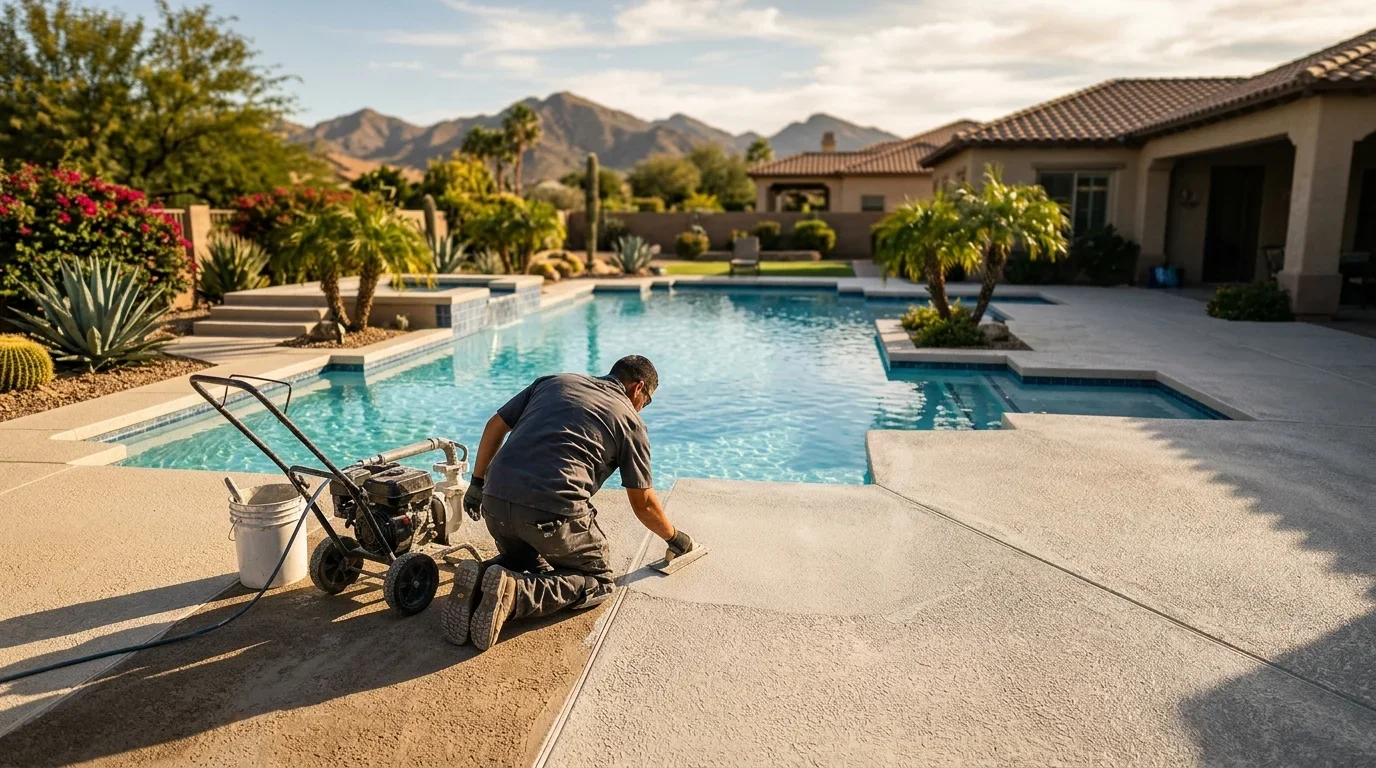
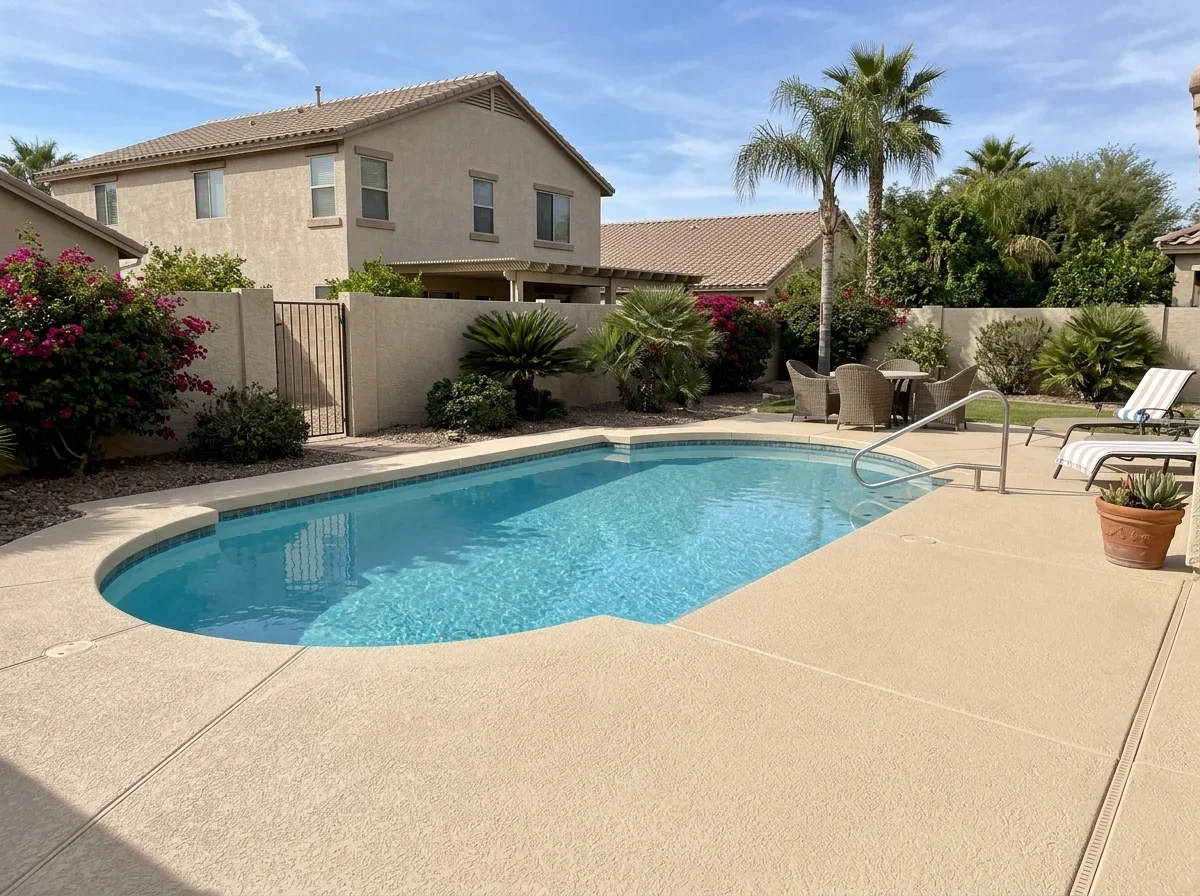
Repair and recoating of concrete pool decks with textured, cool-to-the-touch surface coatings.
28 listed Valley companies say they do this.
Cracked, Hot Deck? Resurface It, Don't Replace It
A worn pool deck gets harder to fix the longer it sits, and bare feet in a Phoenix summer make it obvious.
01
Pool deck resurfacing repairs an existing concrete deck and recoats it with a textured, cool-to-the-touch surface. It is not full replacement, and it is more than paint. Concrete, cement and pebble decks each need different prep, so a pro should confirm what can be coated.
Consider a self-applied coating before you start. Read DIY pool deck resurfacing: what to expect first.
Visible cracks, spalling, flaking old coating, stains and a rough, worn texture are the usual triggers. Water gets into open cracks and lifts the coating around them.
Waiting means wider repairs and a bigger bill.
Cracks that move, or sections that have sunk, may need structural repair or replacement before any coating. Get a professional assessment first.
How serious is it
Level 1 of 3: Cosmetic
Signs Stains, rough worn texture, flaking old coating
What to do Resurface the existing deck
Level 2 of 3: Developing
Signs Visible cracks and spalling, with water getting in
What to do Repair and recoat before repairs widen
Level 3 of 3: Structural
Signs Cracks that move or sections that have sunk
What to do Get a professional assessment first
A deck that burns bare feet or turns slick when wet is a main reason Phoenix, Scottsdale and Gilbert homeowners choose a cool coating.
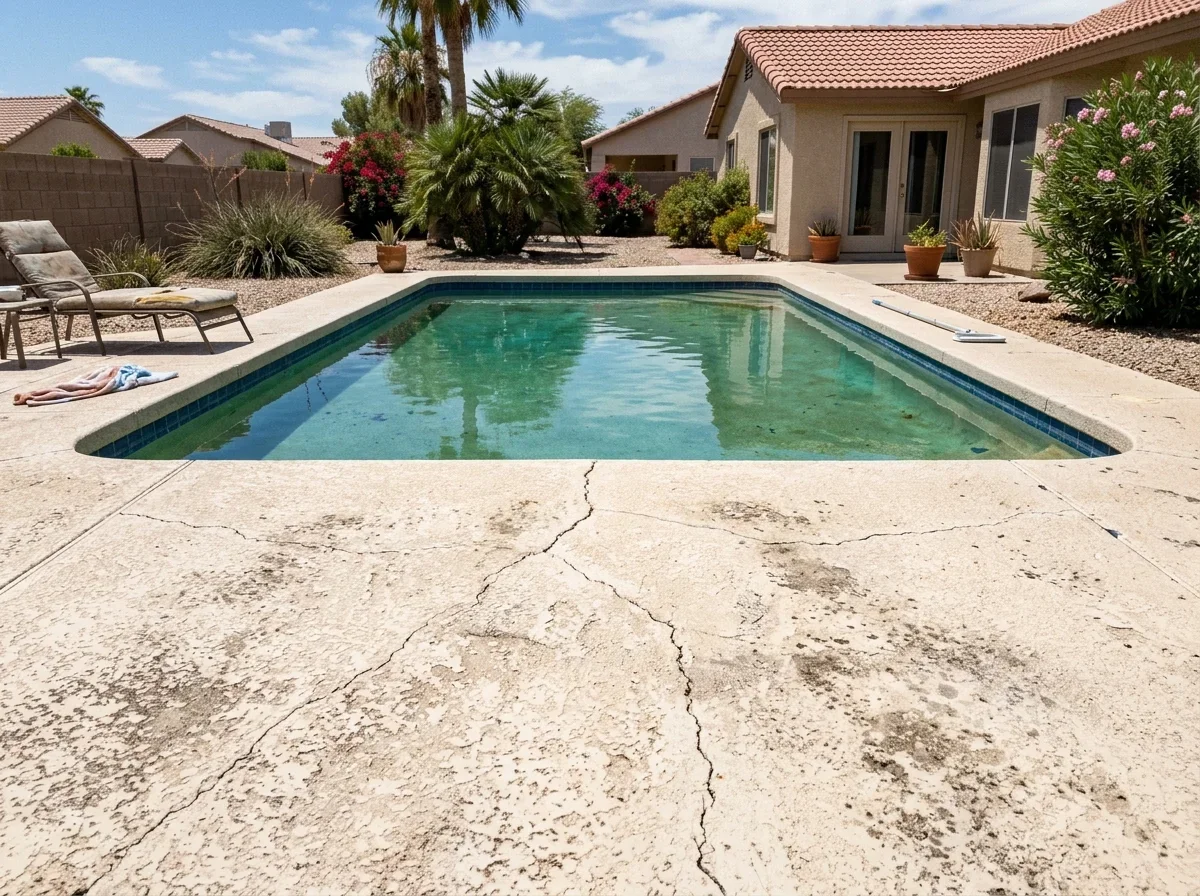
Sound familiar? Your deck is cracked and stained. You painted over it. The paint peeled by the next summer. Now the cracks are wider and the surface is rougher.
02
Deck size, crack and prep condition, coating system, texture or design, and access all move the price. A small deck in good shape costs far less than a large one needing heavy repair.
Price factors
What moves the price
Deck size
A small deck costs far less than a large one
Crack and prep condition
Heavy repair adds to the total
Coating system
The system chosen changes the per sq ft rate
Texture or design
More detailed finishes raise the price
Access
Harder access can add to the job
One Phoenix-area-relevant benchmark comes from a pool builder's published guide.
| Option | Per sq ft | Typical 500 to 700 sq ft deck |
|---|---|---|
| Concrete overlay | $6 to $14[1] | $3,000 to $8,000[1] |
| Heavy crack or structural repair | Depends on the job | Depends on the job |
| Full replacement | Depends on the job | Depends on the job |
Get an itemized written quote that separates repair, prep and coating.
Pro tip
Ask each contractor to price repair, prep and coating as separate lines so quotes can be compared side by side.
See what pool deck resurfacing costs in Phoenix for ranges and the replacement comparison.
03
A resurfacing job moves through these steps, from first inspection to cure.
Step by step
Resurfacing at a glance
Inspection and quote
The contractor checks the deck for movement, sunken sections and old coating.
Cleaning and removal
Dirt, stains and failing coating come off.
Crack and joint repair
Cracks are filled and joints addressed.
Surface prep
The concrete is profiled so the coating bonds.
Primer or base coat
This seals and prepares the surface.
Textured topcoat
The final coat sets the grip and finish.
Cure and return to use
Follow the manufacturer's cure times.
Ask who pulls any permit. Under ROC guidance, permits are the owner's responsibility unless the contract says otherwise.
Work near property lines or tied to pool changes can also trigger Phoenix review steps, so check the Phoenix permit guide. In Mesa, Chandler and elsewhere, ask how the crew schedules around summer heat and monsoon storms.
04
The Arizona Registrar of Contractors licenses pool work under R-6, CR-6, B-5, B-6, KA-5 and KA-6. R-6 scope excludes complete replacement of plaster or pebble interiors and decks, so ask which class covers your deck work.
The Arizona pool license classes guide breaks them down.
Use the ROC Contractor Search and check:
Then confirm the contract terms:
"Licensed, bonded and insured" in an ad proves nothing.
The ROC requires workers' compensation, not general liability, so ask for proof of both. See why that phrase falls short.
Checklist
Questions to ask before you hire
0 of 6 ticked
Tick them off as you go. Nothing is saved or sent.
Compare licensed pool deck pros serving Phoenix, Scottsdale and Gilbert below, and request itemized quotes side by side.
Acrylic-based deck coatings and polyurethane-modified systems last the longest for pool decks, typically 5-10 years with proper prep and reapplication. Elastomeric and cementitious coatings can also perform well on concrete that has minor cracking, but lifespan depends heavily on surface prep and UV exposure.
| Coating Type | Typical Lifespan | Cost per sq ft | Best Use |
|---|---|---|---|
| Acrylic deck coating | 3-5 years | $1-$3 | Budget refresh, light traffic |
| Elastomeric coating | 5-8 years | $2-$4 | Cracked concrete, flexible surfaces |
| Polyurethane-modified acrylic | 7-10 years | $3-$5 | Long-term durability, high UV areas |
| Epoxy-based system | 5-10 years | $4-$7 | Heavy use, but can peel in direct sun |
| Liquid rubber | 3-6 years | $3-$6 | Crack bridging, may fade or chalk |
Polyurethane-modified acrylics generally offer the best balance of longevity and UV resistance in Arizona.
Phoenix, AZ
 AExcellent
Serves the Valley
 AExcellent
Phoenix, AZ