Plaster and pebble interior finishes compared
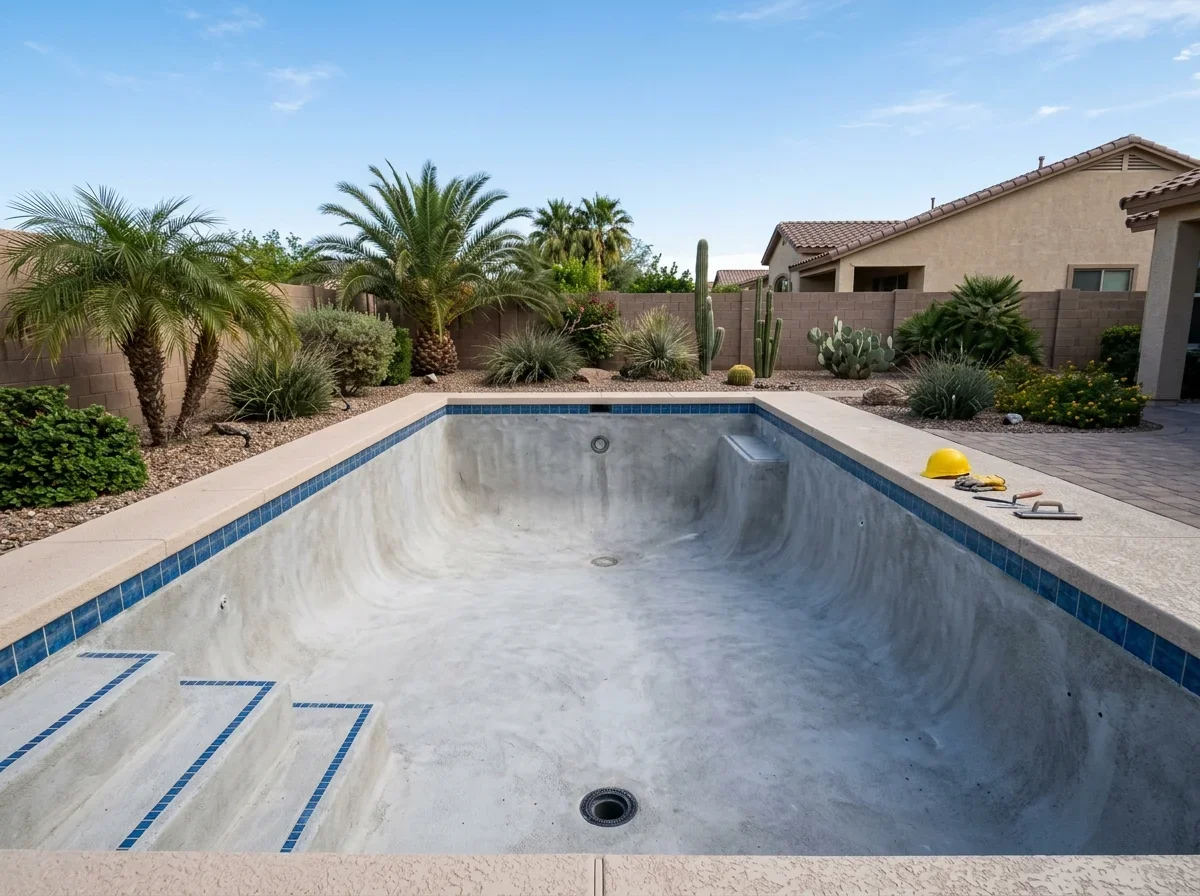
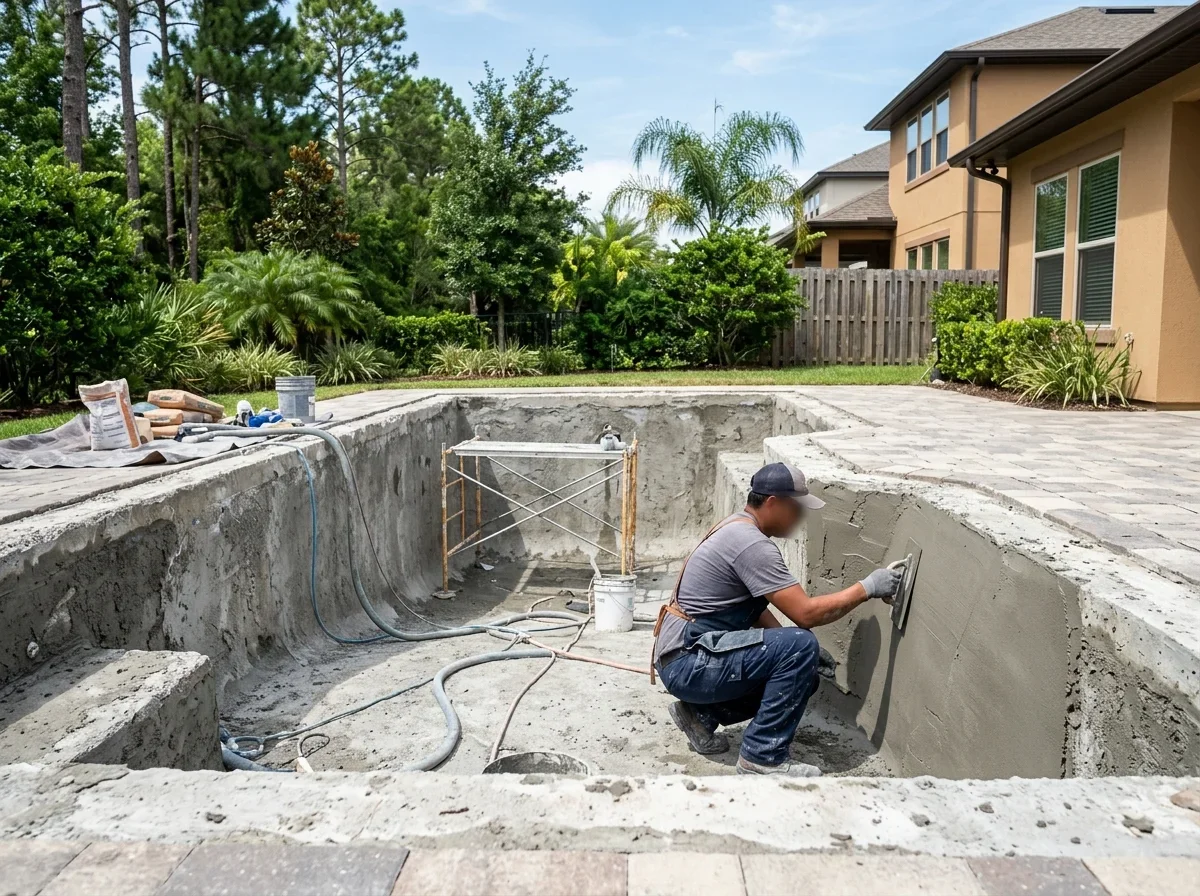
Standard white plaster is a cement-based interior finish. Pebble is also cement-based, but small stones are exposed at the surface, which gives it texture and a natural, multi-tone look. Both go on as an interior coat over the pool shell, so the structure underneath stays the same.
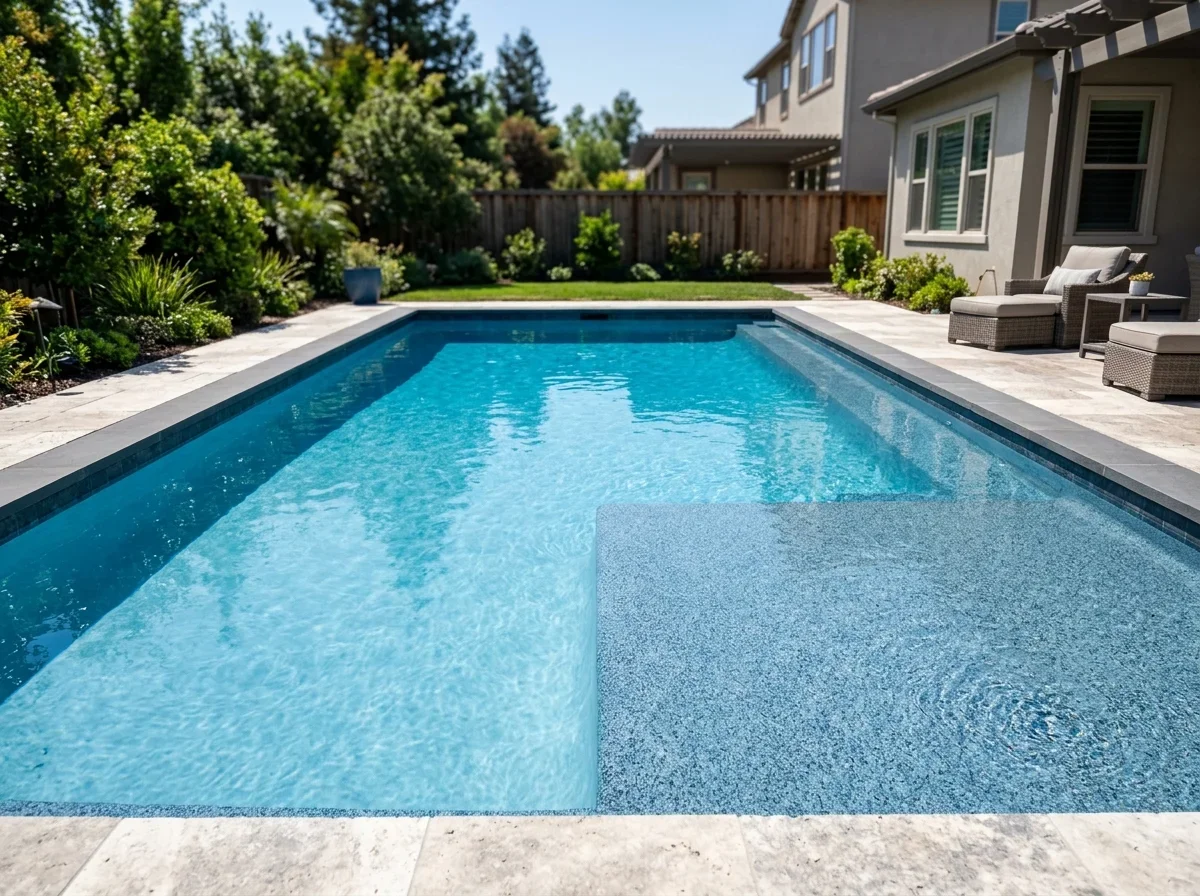
For how the work is done, see Pool Resurfacing and Replastering.
Quartz is the middle option, a cement finish with quartz aggregate mixed in. Many people comparing plaster and pebble end up comparing all three.
| Plaster | Quartz | Pebble | |
|---|---|---|---|
| Feel underfoot | Smoothest | Between the two | Textured; varies by product |
| Upkeep | Regular brushing, careful chemistry | Similar care; follow the product's instructions | Routine brushing and testing; texture can make brushing harder |
| Appearance | Uniform, classic | Subtle sparkle, more depth than plaster | Varied color, natural look |
| Relative price tier | Lower | Middle | Higher |
| Lifespan claims | Varies; ask for the written warranty | Varies; ask for the written warranty | Varies; ask for the written warranty |
"Pebble" is not one surface. Some products are polished or ground smoother, and others are left coarse.
Pebble or plaster: durability for Phoenix pools
Pebble is widely said to outlast plaster. The manufacturer of PebbleTec describes its finishes as generally more durable because exposed aggregate resists cracking, staining and fading. That same description says results depend on water chemistry, climate and maintenance.[3]
Treat it as a direction, not a number. Lifespan figures vary widely by source, and most come from companies selling a finish.
Key takeaways
- Pebble is widely said to outlast plaster, but lifespan figures vary by source
- Plaster costs the least, quartz sits in the middle, and pebble costs the most
- Pebble is textured; plaster is smooth
- A warranty describes what the maker covers, not how long the surface lasts
What actually drives wear
Water balance is the biggest controllable factor. The PebbleTec warranty states that proper water chemistry is essential and that improper maintenance can void coverage.[1]
Brushing and testing matter too, and sun and heat add stress.
A warranty is not a lifespan promise
PebbleTec's residential material warranty is five years when an authorized applicator installs the finish.[1] Its PebbleQuartz line carries a one-year standard warranty, with registration extending the material warranty to five years and adding a two-year installer workmanship warranty.[4]
Those terms describe what the maker will cover, not how long the surface will last. Ask what the warranty covers:
- Finish defects versus chemistry-related wear
- Materials versus labor
- Whether it transfers to a new owner
- What maintenance records you must keep
Texture underfoot with plaster versus pebble
Plaster is smooth. Pebble is textured, and standard aggregate can feel rough on bare feet, which matters most on steps, benches and shallow lounging areas.
Smoother pebble variants exist, including polished or ground options, and they reduce the roughness without erasing it. Quartz generally sits between plaster and standard pebble.
Side by side
Plaster versus pebble underfoot
Plaster
- Smooth
- Uniform, classic look
Pebble
- Textured
- Polished or ground options feel smoother
Photos can't tell you any of this. Touch a physical sample, then walk on a finished pool with the same product if you can.
Get the product line, aggregate size, texture treatment and color in writing. "Smooth pebble" can mean several different specifications.
Checklist
Put in writing before you sign
0 of 4 ticked
Tick them off as you go. Nothing is saved or sent.
Upkeep needed for plaster and pebble surfaces
Neither is maintenance-free. PebbleTec's care instructions call for testing the water at least weekly and brushing during startup and about weekly afterward, depending on dust and debris.[2] Texture can make brushing harder on pebble.
New plaster is more demanding at the start. PHTA startup guidance for plastered pools calls for brushing at least twice daily during the initial curing period, along with frequent water testing and recordkeeping.[5]
Appearance is the other trade-off. Plaster gives a uniform, classic look and light-blue water. Pebble gives a varied, natural look that can hide minor imperfections.
For ongoing care, see Pool Service and Maintenance.
Price tiers for plaster, quartz and pebble
The order is consistent: plaster costs the least, quartz sits in the middle, and pebble costs the most. Ground or polished pebble can add to the price, and each upgrade should be a separate line item.
Phoenix-area pool companies' own websites, checked October 2026, give general guidance only. One company's site puts a standard plaster resurface at $4,500 to $7,000, while another puts a Pebble Tec resurface at $6,500 to $12,000. A third says a resurface that includes tile and coping runs $12,000 to $25,000.
Price range
Resurface prices quoted on company websites
| Item | Low | High |
|---|---|---|
| Standard plaster resurface | $4,500 | $7,000 |
| Pebble Tec resurface | $6,500 | $12,000 |
| Resurface with tile and coping | $12,000 | $25,000 |
The overlap tells the story. Shell condition, pool size, prep work, tile, coping and startup move the total more than the finish name does.
Ask every bidder whether the quote is interior-only or includes those items, and see Pool Resurfacing Cost in Phoenix for what drives the price.
Pro tip
Ask every bidder to price the same finish and scope, with upgrades as separate line items, so the quotes compare fairly.
Contractor licensing for replastering a pool in Arizona
Under the Arizona Registrar of Contractors (ROC) classifications, the R-6 swimming pool service and repair specialty excludes complete replacement of plaster or pebble interiors. B-5 (general swimming pool contractor, residential) covers construction and repair, including replastering and remodel work, and KA-5 is the dual commercial and residential class. Confirm the classes at roc.az.gov/license-classifications, or read R-6, B-5 or KA-5: Which Arizona Pool License Fits Your Job?
Check the contractor on the ROC Contractor Search at roc.az.gov/before-hire. Look at active class, bond and Recovery Fund status.
The ROC states that each residential contracting license is covered by the Recovery Fund for up to $200,000, to a maximum of $30,000 per residential property owner, pro rata.[5] On a large job, that may not cover everything.
Also, "licensed, bonded and insured" in an ad proves little. Ask for workers' compensation and liability certificates separately (see Is 'Licensed, Bonded and Insured' Enough in Arizona?).
Before you sign
Under A.R.S. 32-1158, a job over $1,000 needs a written contract with the license number, work description, price and payment schedule (azleg.gov/ars/32/01158.htm). Use it to lock in the finish:
- Confirm the license class covers replastering.
- Run the contractor through the ROC search.
- Write the finish spec into the contract: manufacturer, product line, aggregate size, color and texture treatment.
- Attach the written warranty by reference.
- Name who pulls permits. ROC guidance puts that on the owner unless the contract says otherwise, so check Do You Need a Permit to Resurface a Pool in Phoenix?
- Avoid cash, and don't let payments get ahead of finished work. That is ROC guidance, not a legal deposit cap.
Plaster vs. pebble FAQ
What are the differences between plaster and quartz pool finishes?
Plaster is smooth and costs less. Quartz adds quartz aggregate for a slightly different look and sits in the middle on texture and price.
What is PebbleTec pool finish?
What does plaster do for a pool?
Plaster is the waterproof interior coating over the pool shell. It also gives the pool its smooth surface and color.
What are the types of pool finishes?
The main types are standard plaster, quartz, and pebble, which includes polished and ground versions. Brand names vary, so ask for the exact product in writing.
Is pebble rougher than plaster?
Yes, standard pebble usually is. Polished or ground products feel smoother, though still not like plaster, so test a sample first.
Does pebble cost more than plaster?
Generally yes, pebble sits in the higher price tier. Totals depend on shell condition, size and scope, so request an itemized written quote.
Questions
- Pebble Technology International. "PEBBLE TECHNOLOGY PROTECTION PLAN OVERVIEW." https://partner.pebbletec.com/wp-content/uploads/2022/04/PTI-Protection-Plan-Overview-1.20.22.pdf. Accessed October 17, 2026.
- Pebble Technology International. "Pool Care Instructions - Maintaining proper water chemistry." https://pebbletec.com/customer-support/pool-care-instructions/. Accessed October 17, 2026.
- Pebble Technology International. "Pool Finishes." https://pebbletec.com/products/pool-finishes/. Accessed October 17, 2026.
- Pebble Technology International. "PebbleTec Warranties - We stand behind our products." https://pebbletec.com/customer-support/warranty-information/. Accessed October 17, 2026.
- Pool & Hot Tub Alliance. "I. INTRODUCTION." https://www.phta.org/pub/?id=33925d23-1866-daac-99fb-dbf23704fd63. Accessed October 17, 2026.