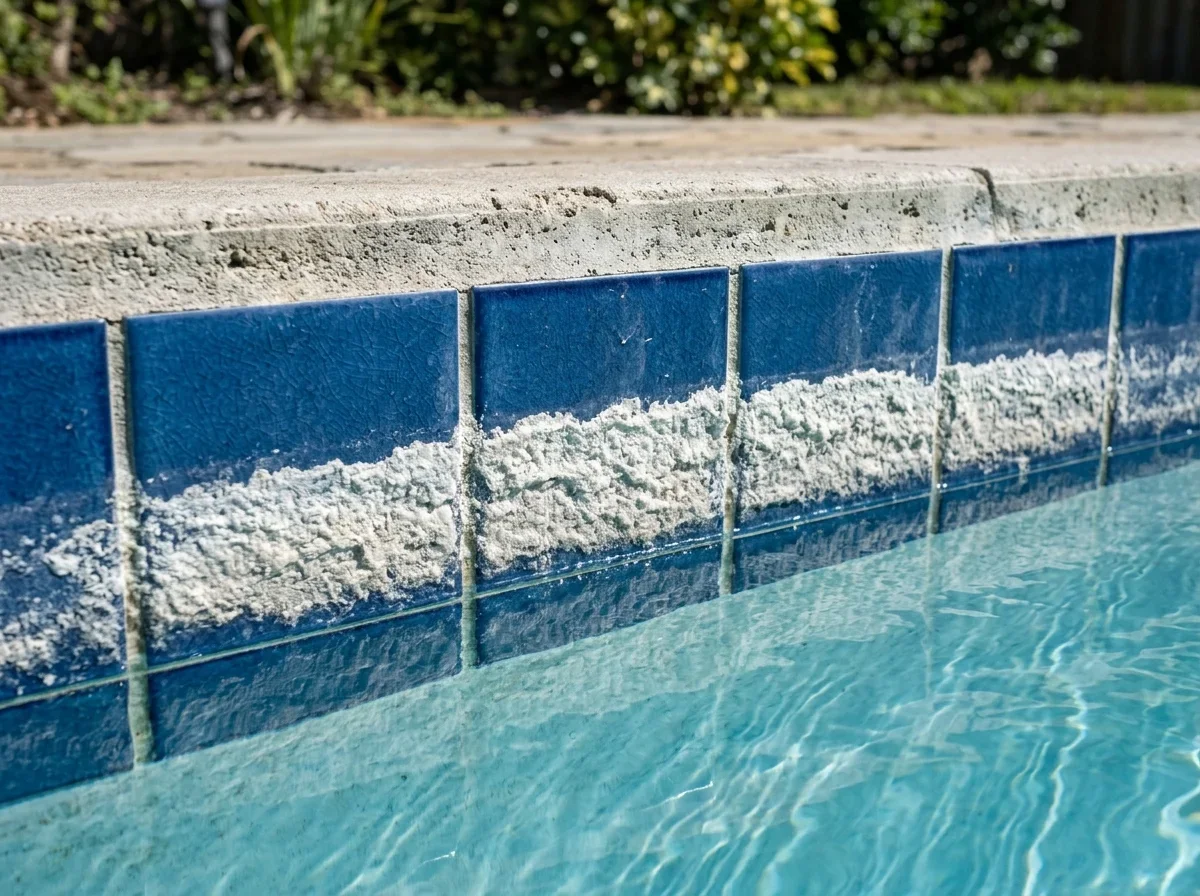
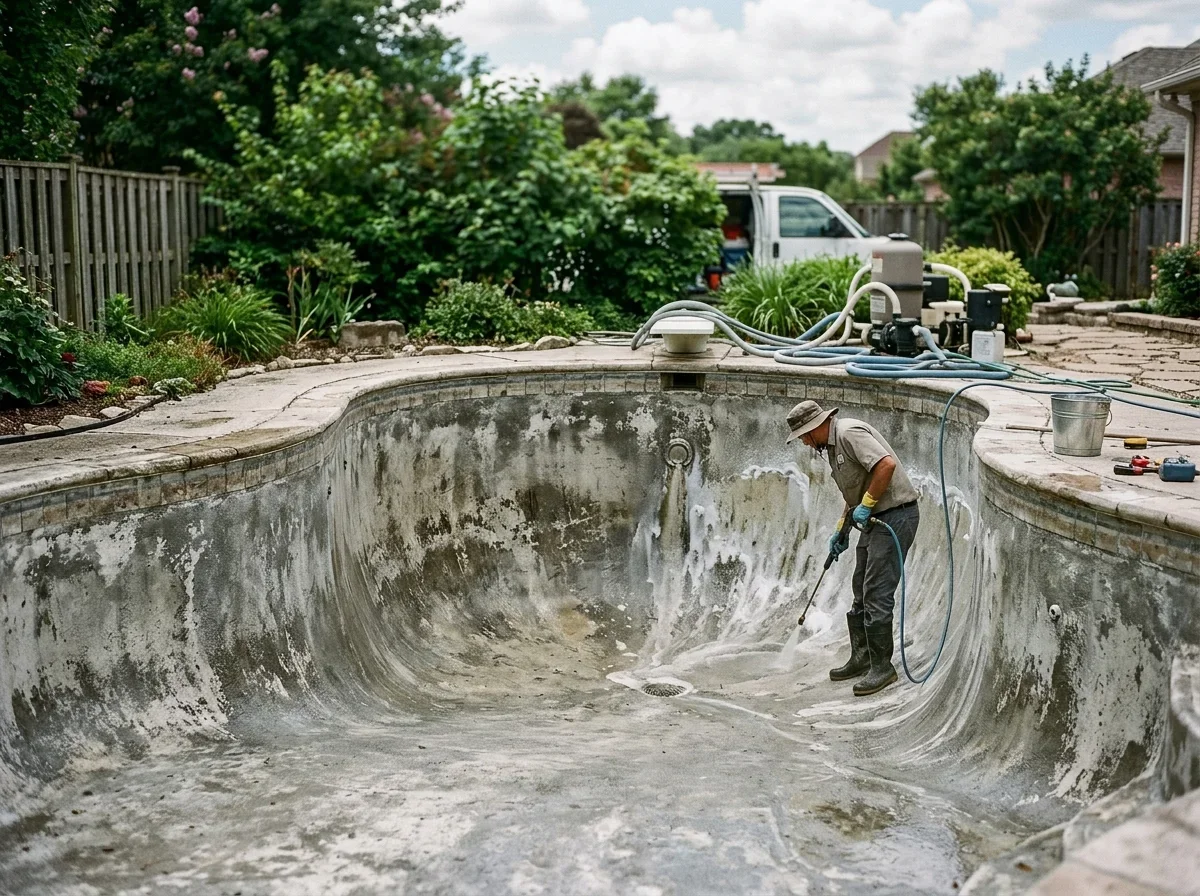
What an acid wash does to pool plaster
An acid wash uses diluted muriatic acid to dissolve a very thin top layer of plaster, carrying away stains, scale and mineral film with it. Pool professionals commonly use it to remove stains and scale buildup and to prepare a pool for new plaster.[1]
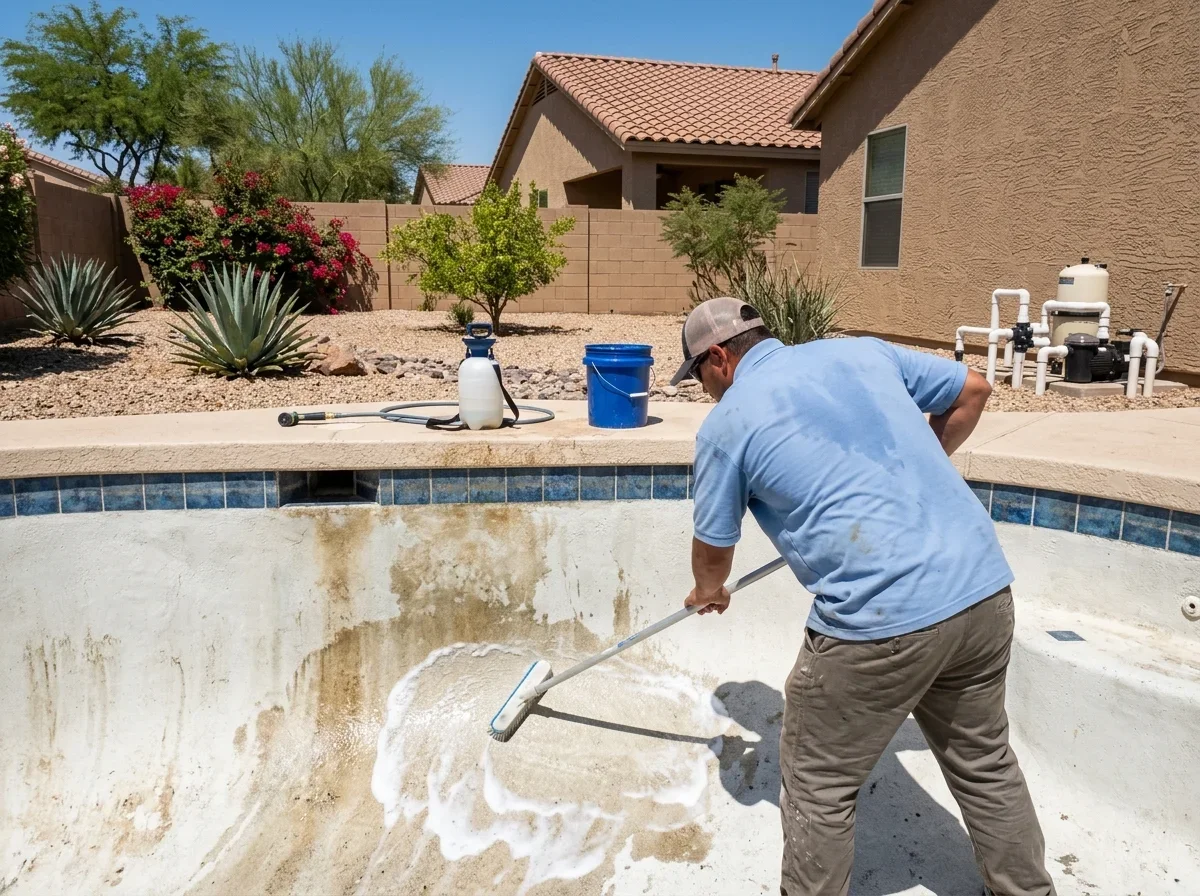
It is surface removal, not a coating or a repair. The plaster is permanently thinner afterward.
It is also different from lowering the pH of your water, which is routine chemistry. And it applies to plaster. Tile, pebble and some other finishes need different treatment, so confirm what you have first.
If your main problem is white crust at the waterline, read white crust on pool tile before you strip any plaster.
Reasons to acid wash a swimming pool
The usual reasons are stubborn stains, heavy scale, dull or blotchy plaster, and preparing an older surface for new plaster.[1] Phoenix's very hard water (300+ ppm calcium carbonate) makes scale a recurring issue here.
Acid is not the right tool for every problem. A green pool needs algae treatment first, which is covered in green pool cleanup. Loose crust on tile may only need tile-level calcium removal.
Try the lesser fix first.
Test your water and work out whether you are dealing with algae, calcium, metals or tired plaster. Wash only if it will not simply expose a failing surface. Many Phoenix-area pools sit in homes built around 1985, so older or previously washed plaster is common.
For what the job runs, see pool acid wash cost.
General sequence for an acid wash
Procedures vary by plaster manufacturer, so treat this as the general sequence rather than a recipe:
- Check the plaster for hollow spots, flaking, cracks and thin areas.
- Let chemicals dissipate and confirm chlorine and bromine read zero before draining.[3]
- Drain the pool slowly and protect drains and equipment.
- Wet the surface and apply diluted acid in manageable sections.
- Brush evenly, then rinse thoroughly.
- Neutralize the acid-wash water to approximately pH 7 and remove residue.[1]
- Refill, then rebalance and monitor the water.
Draining carries its own risk. In a high-water-table or saturated site, an empty shell can be stressed structurally. Bare plaster can also suffer in summer sun when Phoenix highs reach 106°F.
Cooler months are generally the more practical window, though a pool pro should judge your site.
Step by step
The general sequence
Inspect
Check the plaster for hollow spots, flaking, cracks and thin areas.
Drain
Confirm chlorine and bromine read zero, then drain slowly.
Wash
Apply diluted acid in sections, brush evenly and rinse.
Neutralize
Bring the wash water to approximately pH 7 and remove residue.
Refill
Rebalance and monitor the water.
How to properly add acid to a pool
Acid goes into water, never water into acid. PHTA's guidance is to pre-dilute muriatic acid by adding it to a bucket of water.[2]
Exact dilution ratios depend on the product and surface, so take them from the plaster or acid manufacturer. Wear the PPE the safety data sheet and PHTA call for, and work with good ventilation.[1]
How it works
How to dilute muriatic acid
Step 1: Start with a bucket of water
Water goes in first
Step 2: Add the acid to the water
Never water into acid
Step 3: Apply the diluted mix to the wet surface
Ratios come from the manufacturer
Time an acid wash takes
A professional can often finish the wash itself in a day once the pool is drained. Drain-down, refill and rebalancing stretch the whole project longer. Ask for the full schedule in writing, from drain through startup.
Disposal needs planning too.
PHTA notes that discharge to sanitary or storm drains may not be permitted.[1] One Arizona city asks for a permit before draining into a public street, and it wants slow pumping to avoid erosion and stormwater problems.[3] Rules differ by city, so check with your own utility or stormwater office.
Pool surface appearance after an acid wash
Expect a brighter, cleaner surface right away. Light stains, scale film and dullness are the things an acid wash handles best.
Expect some trade-offs as well. The plaster may feel rougher, and color can look uneven where different amounts of material came off. Here is how the results usually divide:
| Likely to improve | Unlikely to improve |
|---|---|
| Light surface stains | Cracks |
| Thin scale film | Delaminating or flaking plaster |
| Dull, blotchy plaster | Deep or embedded stains |
| Some organic discoloration | Most metal stains, which may need a different treatment |
A wash can also reveal weak spots or a different-colored layer underneath. If that happens, a cleaner pool is not what you get.
Aftercare matters. Water must be rebalanced and watched as the pool refills, and plaster manufacturers publish start-up chemistry targets worth following.[2]
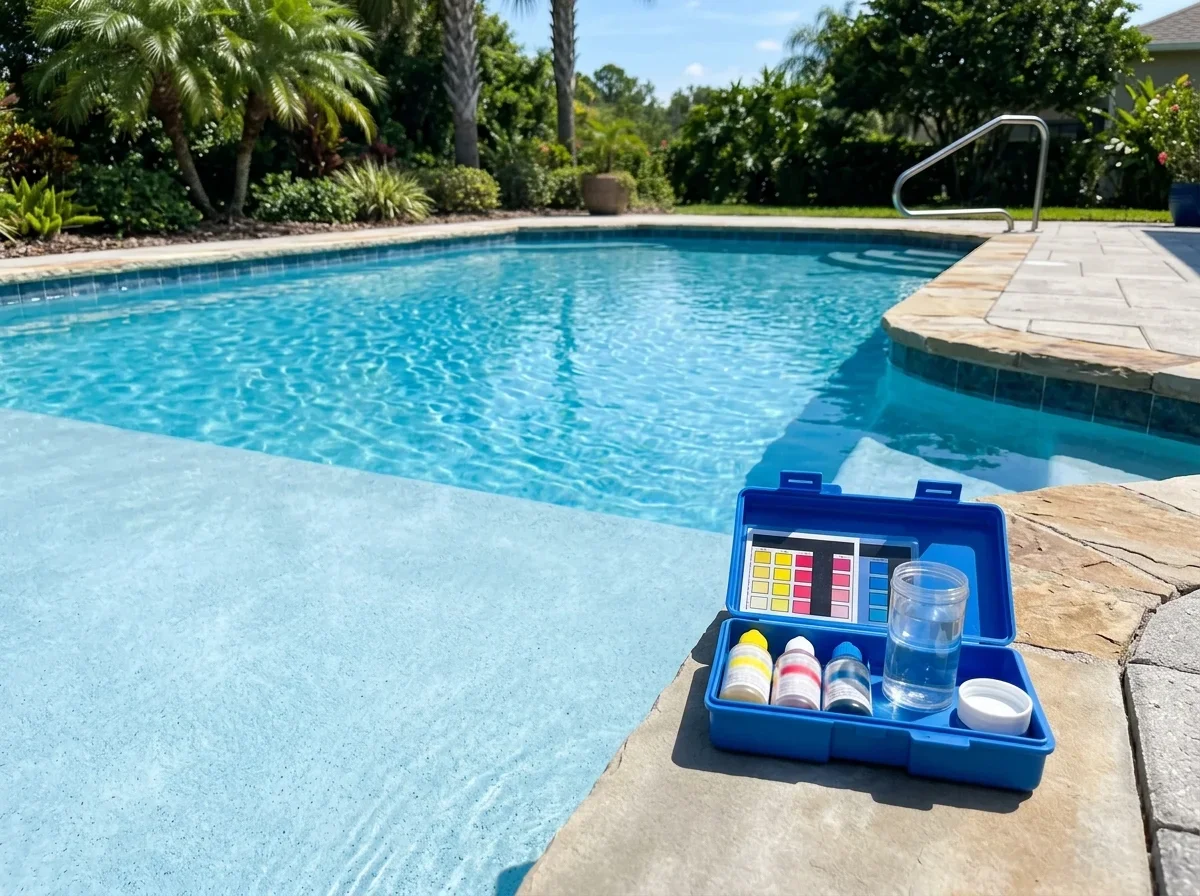
Stains return if calcium, metals or irrigation runoff go uncontrolled.
Risks an acid wash poses to plaster
Etching removes material, so every wash shortens the surface's remaining life. How often is too often depends on the manufacturer and the plaster's condition. Ask the plaster installer rather than guessing.
Technique matters. Acid that is too strong, left too long or applied unevenly can leave blotches, rough patches or exposed substrate. Poor neutralizing can leave residue behind.
Safety risks are real too. Muriatic acid gives off fumes and burns skin and eyes, and wastewater cannot just go down any drain.[1]
Because Phoenix water redeposits scale, repeated washing is a trap.
Key takeaways
- Every wash removes plaster and shortens its remaining life
- Strong acid, long contact or uneven application can leave blotches or expose the substrate
- Muriatic acid fumes burn skin and eyes
- Fixing calcium and pH balance does more than washing again
Fixing calcium and pH balance does more than washing again. If your plaster is already thin or failing, pool resurfacing and replastering may be the better fix.
Doing an acid wash yourself versus hiring a pro
Some owners do it, but the line between cleaning and permanent damage is concentration, contact time and even coverage. Stop and call a pro if any of these apply:
- Plaster is old, thin, rough, cracked, flaking or hollow-sounding
- Scale is heavy or widespread
- You have a pebble finish
- You are unsure about drainage, the water table or where wastewater goes
- You cannot neutralize and dispose of runoff properly
- You do not have the right PPE and ventilation
In Arizona, check the license class. R-6 covers pool service and minor repair, while B-5 covers pool construction and repair.[4]
Ask which class applies to any replaster contingency if the surface turns out to be failing. Verify the license on the ROC Contractor Search.[5] Our guide to pool license classes explains the differences.
Ask who handles drain-down, runoff disposal and any permit, and get it in writing.
Pro tip
Ask each pro to put the full schedule, drain-down, runoff disposal and any permit in writing so quotes can be compared on the same scope.
For a professional assessment, see pool tile repair and calcium removal.
Acid washing a pool: frequently asked questions
How do you properly add acid to a pool?
Add acid to water, never the reverse, and pre-dilute in a bucket.[2] Take ratios and PPE from the manufacturer's label and safety data sheet. See the step-by-step section.
How long does it take to acid wash a swimming pool?
The wash itself is often quick for a pro, but draining, refilling and rebalancing add time. Ask for a written schedule.
Why do you acid wash a swimming pool?
To remove stains and scale buildup and to prepare plaster for resurfacing.[1] Diagnose the cause first.
Can I acid wash my pool myself?
Possible, but risky. Use the checklist above to decide, and for pricing see pool acid wash cost.
Is it safe to acid wash a pool?
Only with proper PPE, ventilation, neutralization and lawful disposal.[1] Fumes and splashes can injure people and damage landscaping.
How often can you acid wash a pool?
Sparingly. Each wash removes plaster, so ask the plaster manufacturer or installer for guidance on your surface.
Questions
- Pool & Hot Tub Alliance. "Technical Bulletin." https://www.phta.org/pub/?id=08552988-1866-daac-99fb-9be5-a6c1cb7d. Accessed October 17, 2026.
- Pool & Hot Tub Alliance. "Start-Up for Plastered Pools." https://www.phta.org/pub/?id=9d96a292-1866-daac-99fb-37b968a3f382. Accessed October 17, 2026.
- City of Sierra Vista, Arizona. "Draining Your Pool." https://www.sierravistaaz.gov/our-city/departments/public-works/protecting-our-water/draining-your-pool. Accessed October 17, 2026.
- Arizona Registrar of Contractors. "License Classifications." https://roc.az.gov/license-classifications. Accessed October 17, 2026.
- Arizona Registrar of Contractors. "Contractor Search." https://azroc.my.site.com/AZRoc/s/contractor-search?licenseId=a0o8y000000b2xZAAQ. Accessed October 17, 2026.