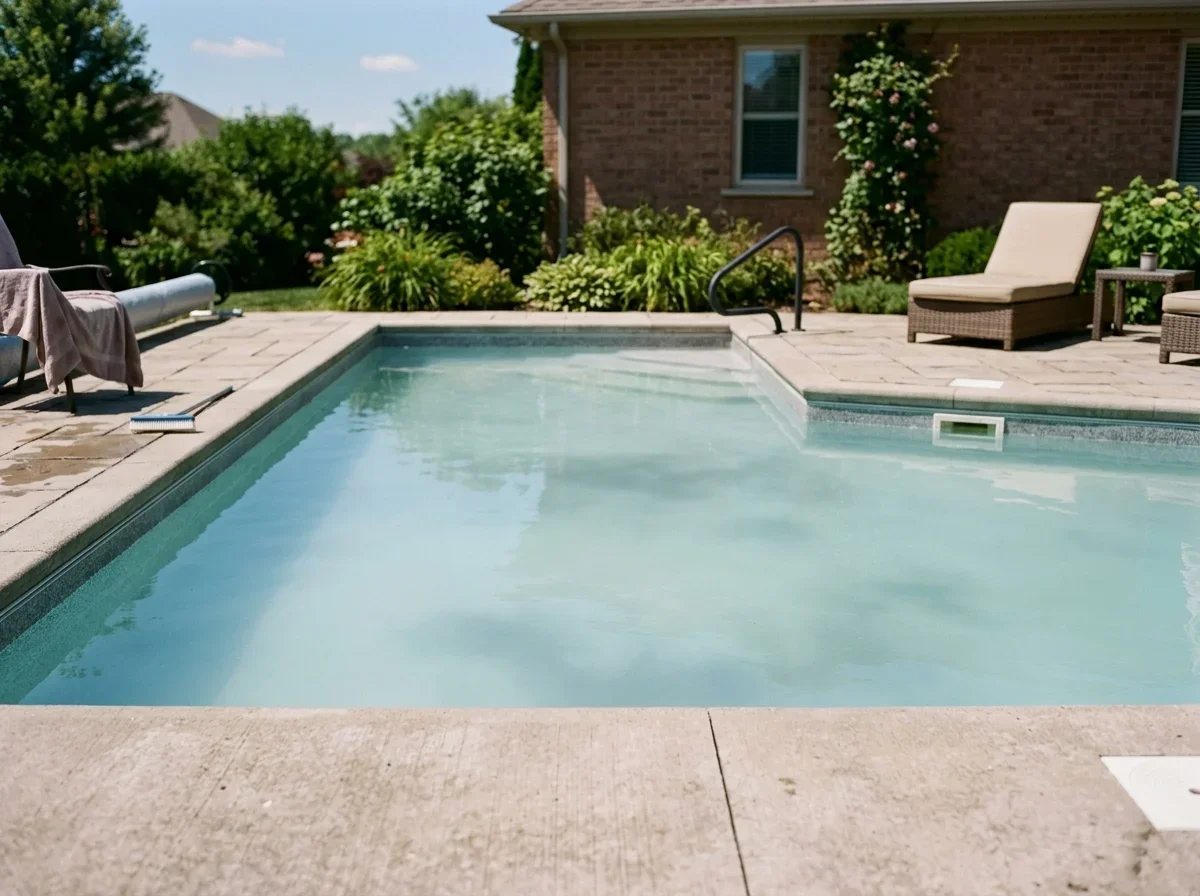
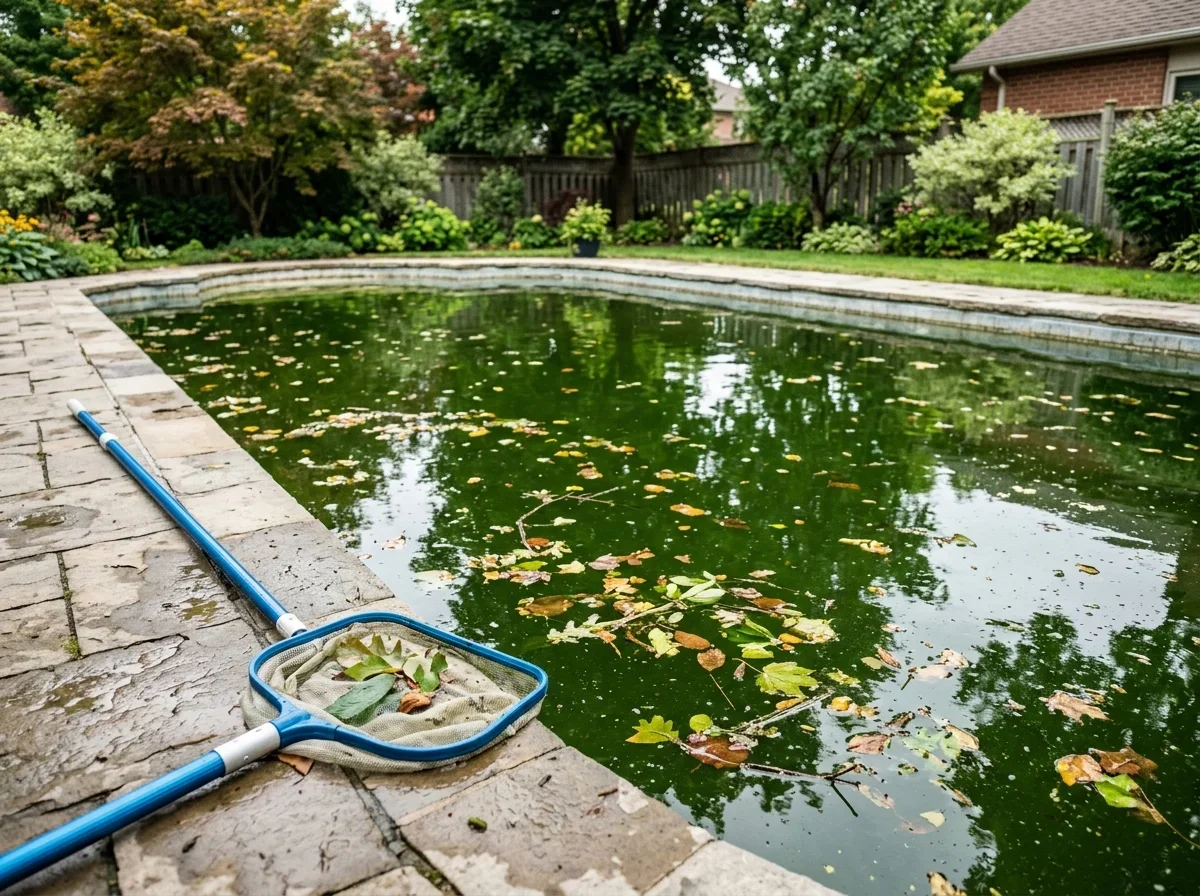
Defining yellow-green algae in a pool
Yellow-green algae is usually mustard algae (also called yellow algae). It's a yellowish, yellow-green or sometimes brownish growth that clings to pool surfaces and often looks like dirt or sand. PHTA lists mustard algae among the common pool algae types and says it calls for thorough brushing and, often, repeated chlorine shock applications.[1]
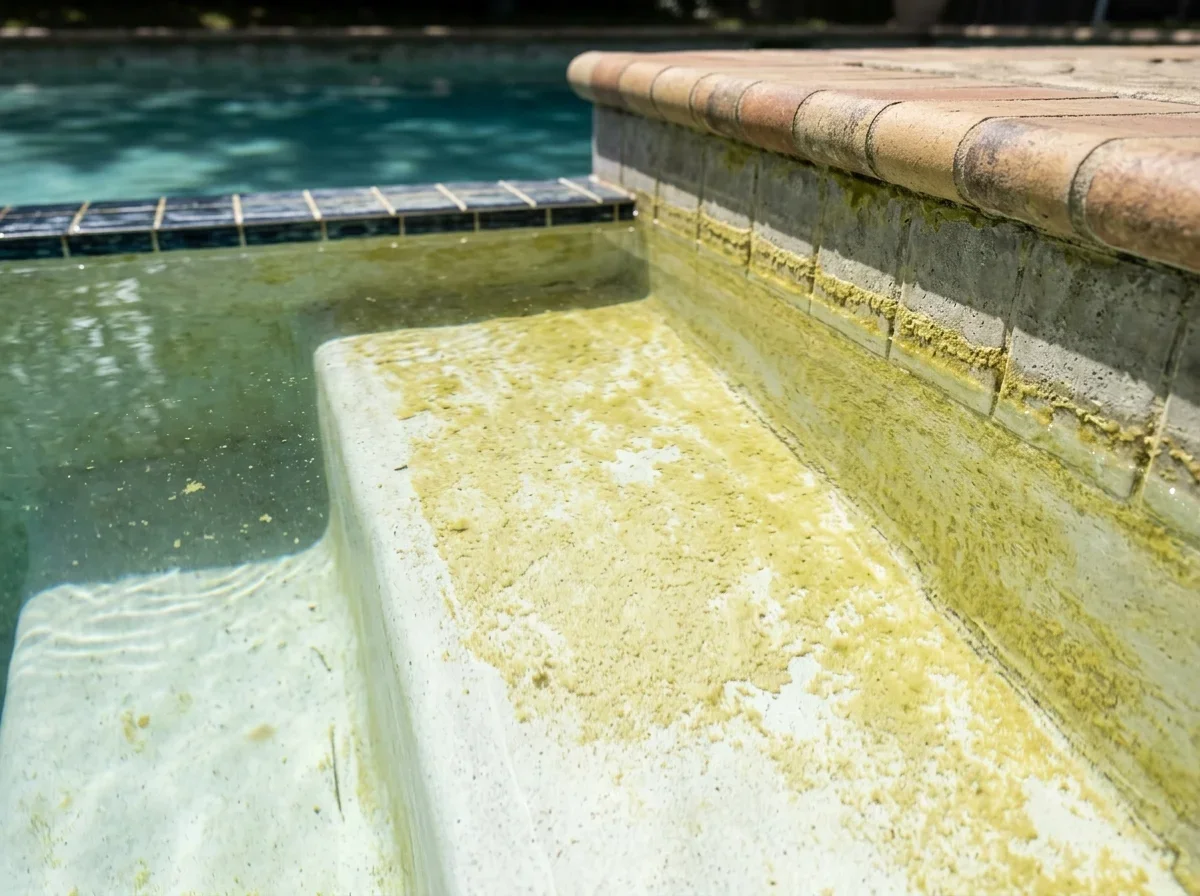
It tends to hide.
Look at shaded walls, steps, floor corners and behind ladders, where circulation is weakest and sunlight is lowest. Because it sits in patches instead of turning the whole pool green, many owners shrug it off as debris.
If your water is hazy before any color shows up, start with cloudy pool water causes. Cloudiness is often the early warning.
Telling yellow-green algae apart from green algae, dirt or pollen
Color alone doesn't settle it. Phoenix dust and monsoon fallout (July through September) can leave a yellow-brown film that looks a lot like mustard algae.
A quick brush test sorts it out.
- Brush a small patch on a shaded wall or step.
- Watch what happens. Mustard algae lifts into a dusty cloud, then settles or disperses.
- Check the same spot again a day or two later. A film that returns in the same place points to algae.
If the film keeps returning, get the water fully tested before buying specialty products.
Algae by color and texture
| Algae type | Color | Texture and feel | Where it shows up | Brush test result | Typical approach |
|---|---|---|---|---|---|
| Yellow-green / mustard | Yellow, yellow-green, sometimes brownish | Dusty, sand-like film | Shaded walls, steps, floor corners, behind ladders | Brushes off easily, tends to return | Thorough brushing, repeated treatment, clean gear and filter (see how to clean a green pool) |
| Green | Bright to dark green | Slimy or fuzzy; may cloud the water | Whole pool, floating or on surfaces | Lifts into a green cloud | Brush, treat, filter (see how to clean a green pool) |
| Black | Dark blue-black spots | Raised, firm spots | Plaster, rough surfaces, grout | Resists brushing | Needs a different approach than routine brushing, especially when spots dig into plaster; see a pro |
| Pink or red (bacterial film) | Pink to reddish | Slimy film | Wet, low-flow areas, fittings | Wipes off, may return | Scrub, clean the area, address circulation |
Swimming safety when yellow algae is present
Best to stay out until it's treated and the water is clear. PHTA says pools should remain closed until acceptable water clarity is restored.[1] Algae makes surfaces slippery, cuts visibility and usually signals unbalanced water.
The CDC advises avoiding pools with improper chlorine or bromine levels, improper pH, or cloudy water.[2] For visible algal-bloom signs such as discoloration, foam, scum or mats, it recommends keeping people and pets out.[4] Discolored or cloudy water can also indicate more germs.[3]
Swimsuits, toys, floats and brushes can carry algae to a clean pool, so treat them too.
Removing yellow-green algae from a pool
The overview is simple, even if the work isn't:
- Brush every surface, including steps, corners and behind ladders.
- Treat the water.
- Run the filter continuously.
- Backwash or clean the filter, then retest.
PHTA recommends backwashing before treatment and chemically cleaning the filter afterward.[1] Follow the label on any product you use.
How it works
The cleanup cycle
Step 1: Brush every surface
Steps, corners and behind ladders
Step 2: Treat the water
Step 3: Run the filter continuously
Step 4: Clean the filter and retest
Whether shock or chlorine alone will kill it
Shocking helps, but one round often isn't enough. Mustard algae is more stubborn than ordinary green algae, and PHTA notes treatment may need repeated chlorine shock applications.[1]
Reasons the growth returns after treatment
Recurrence almost always traces to something that wasn't treated. Check these:
- Shaded spots you missed, especially behind ladders, on steps and in floor corners
- Swimsuits, toys, floats, brushes and skimmer parts that went back in untreated
- A dirty filter that keeps recirculating spores
If you need hands-on help, a green pool cleanup and water treatment provider can handle the whole cycle. For a filter that won't stay clean, see pool filter repair and replacement.
Checklist
If the algae returns, check
0 of 4 ticked
Tick them off as you go. Nothing is saved or sent.
Signs a Phoenix homeowner should call a pro
DIY is reasonable when the growth is limited, you know your water chemistry, and you can brush, filter and retest over several days. Call a pro if:
- It returns after a complete treatment
- The water is too dark to see the floor
- The filter or pump seems to be failing
- You can't tell what you're looking at
Check the license first
Algae cleanup and service falls under the R-6 or CR-6 classification (B-5 for broader work). Look the contractor up on the Arizona Registrar of Contractors search at roc.az.gov/before-hire and confirm an active class that matches the job. Our license class guide explains the differences.
Get it in writing
Arizona law requires a written contract above $1,000 that includes the license number, price and payment terms (A.R.S. 32-1158). A "licensed, bonded and insured" ad is not proof of anything. See why that phrase isn't enough.
Phoenix-area pool companies often list green-to-clean recovery as an entry-level service, but the exact price depends on pool size and condition, so ask for a written quote. Heavier jobs cost more, so get an itemized written quote.
Pro tip
Ask every pool company to quote the same scope, including brushing, treatment and filter cleaning, so the written quotes compare fairly.
Frequently asked questions about yellow-green pool algae
Is it okay to swim in a pool with yellow algae?
How do I get rid of yellow algae in my pool fast?
There's no shortcut that skips the steps. Brush all surfaces, treat the water, run the filter, clean the filter, and retest.
Will shock get rid of yellow algae?
It can help, but mustard algae may need repeated rounds.[1] Follow the product label for dosing.
Will chlorine kill mustard algae?
Chlorine is part of the answer, but mustard algae resists ordinary treatment. Brushing, repeated shocking and filter cleaning all matter.
Is yellow-green algae the same as mustard algae?
Usually, yes. Yellow-green, yellow and mustard describe the same dusty, yellowish growth.
Why does yellow algae keep coming back in my pool?
Usually something was missed: a shaded spot, untreated gear or a dirty filter. If it returns after a complete treatment, a green pool cleanup and water treatment pro can find what you're missing.
Questions
- Pool & Hot Tub Alliance (PHTA). "ABCs of Algae." https://www.phta.org/pub/?id=568fd04b-1866-daac-99fb-16ee5058d5b2. Accessed October 17, 2026.
- Centers for Disease Control and Prevention. "Food and Water Precautions for Travelers." https://www.cdc.gov/yellow-book/hcp/preparing-international-travelers/food-and-water-precautions-for-travelers.html. Accessed October 17, 2026.
- Centers for Disease Control and Prevention. "How to Safely Visit Oceans, Lakes, and Rivers." https://www.cdc.gov/healthy-swimming/safety/how-to-safely-visit-oceans-lakes-and-rivers.html. Accessed October 17, 2026.
- Centers for Disease Control and Prevention. "Preventing Illnesses Caused by Harmful Algal Blooms." https://www.cdc.gov/harmful-algal-blooms/prevention/index.html. Accessed October 17, 2026.